hello@yurtinthedirt.com.au
 +61 489 269 088


 0 Comments
 Share
Share
Yurt & Dome Insulation in Australia: Are They Hot in Summer or Freezing in Winter?
If you’re anything like most people who call or email us, your first question isn’t:
“What diameter is best for my deck?”
It’s usually:
“Am I going to cook in this thing in summer and freeze in winter?”
Fair question.
Australia throws everything at you – 40°C heatwaves, frosty mornings, sideways rain, coastal humidity and high winds. So how do modern yurts and geo domes really handle that? And what actually matters when you’re looking at insulation, covers and climate control?
In this guide, we’ll walk through:
- How yurt and dome insulation actually works (without the engineering degree)
- How they perform in Australian summers and winters
- The biggest mistakes people make with cheap or badly set up structures
- Practical setup ideas we see working for our clients across Aus & NZ
By the end, you’ll know if a yurt or dome will be comfortable for the way you want to use it – studio, weekender, glamping, or full-time living.
1. How thermal performance actually works in a yurt or dome
Modern yurts and geo domes are not just tents with nicer marketing.
A good setup is basically:
- A strong frame (timber or steel)
- A weatherproof outer skin
- A proper insulated layer around the walls and roof
- An inner liner that finishes the interior and helps control drafts
- A solid, insulated floor plus decent windows/vents
Three big things determine how comfortable you’ll be inside:
-
Insulation value of the layers
How well the walls, roof and floor slow down heat moving in or out. -
Airtightness + controlled ventilation
You want to keep draughts and dust out, but still be able to dump hot air and moisture when needed through vents. -
Solar gain (how much sun hits the structure)
Roof and wall colour, shading, orientation and surrounding trees all change how hard your insulation has to work.
Done properly, a yurt or dome behaves much more like a small cabin or studio than a tent.
Done badly (thin fabric, no insulation, no floor insulation, poor ventilation)… you get the horror stories you see on forums.
2. Are yurts hot in summer in Australia?
Short answer: they can be, if you cheap out on materials or ignore shading and ventilation. With the right setup, they’re surprisingly manageable – even in hotter parts of Australia.
2.1 Roof & wall colour
Colour is your first “insulation” layer.
- Lighter, earthy tones on the roof reflect more sun and keep the structure cooler.
- Very dark colours on the roof can look great but will pick up more heat and put extra load on your insulation and cooling.
If you’re in a hot or exposed location, we usually recommend a light to mid-tone roof and slightly darker walls so it still looks grounded without becoming a solar oven.
2.2 Insulation quality in the roof (critical)
Most of the summer heat gain comes through the roof, so this is where you can’t cut corners.
Things that help:
- A continuous insulated layer (no gaps at seams or around the roof ring)
- Insulation that combines reflective layers (to bounce radiant heat) with bulk insulation (to slow conductive heat)
- A light, reflective outer cover that doesn’t get scorching hot to touch
The point isn’t the marketing term; it’s that the roof must be insulated, not just “thicker canvas”.
2.3 Ventilation & high-level heat dump
Even with good insulation, hot air will rise and pool in the top of the structure. Your job is to give it somewhere to escape.
With our setups, that usually looks like:
- On domes, optional solar vent systems mounted high to quietly pull hot air out from the top of the structure.
- On yurts, a vented clear dome at the roof ring that can be opened with a spindle from inside – with tinted options to help reduce glare and solar gain.
- Doors and windows positioned to allow cross-breezes when the weather plays nice.
On still, humid days, many of our clients pair this with:
- A small reverse-cycle split system (runs nicely off a correctly sized off-grid solar system)
- Or a portable evaporative cooler in dry inland climates
This is where a proper solar setup is worth its weight in gold – you can actually run your cooling without stressing about every kilowatt-hour.
2.4 Shading & site choice
A simple reality: a yurt in the middle of a treeless paddock will cop more heat than one with thoughtful shading.
Things that help in hot climates:
- Planting or existing trees to soften afternoon sun (while being sensible about falling branches)
- A simple verandah / awning / pergola on the harshest side
- Playing with orientation so your biggest glazing gets morning light, not brutal afternoon sun
3. Are yurts cold in winter?
Again: they can be, if you treat them like a tent.
But with proper insulation and a sensible heating setup, yurts and domes are very comfortable in winter and hold heat surprisingly well – especially once the floor and drafts are sorted.
3.1 Floor insulation (most people underestimate this)
Cold floors will ruin an otherwise well-insulated structure.
For full-time living or chilly climates we like to see:
- A solid timber or steel deck with insulation between joists; or
- Insulated panels / sub-floor systems that prevent cold air from circulating directly under a thin floor
Even simple things like thick rugs plus underlay on top of an insulated deck make a huge difference.
3.2 Wall & roof insulation in winter
Whatever insulation system you use, you’re looking for:
- Consistent coverage (no big gaps around windows, joins, or the roof ring)
- Enough bulk to slow heat loss on long, cold nights
- An inner liner that stops drafts and creates a calmer air layer around you
Both natural fibre systems and engineered multi-layer systems can work well if installed correctly and paired with a proper weather-tight outer cover.
3.3 Heating options that actually work
Most Aussie yurt and dome owners go for one (or a combo) of:
-
Reverse-cycle air-con
Efficient on a well-designed solar system, easy to run on a timer and gives you heating and cooling in one unit. -
Electric panel heater / oil column heater
Better for studios or occasional use spaces; simple, but can chew power if you’re off-grid and under-sized on solar. -
Diesel heater
A great option for tiny homes, cabins and domes, especially where electricity is limited. We often point people to our friends at DieselHeat in Tasmania for quality diesel heating and hot water systems designed for off-grid setups.
Because yurts and domes are relatively compact, you don’t need huge units – a modest heater goes a long way once everything is insulated properly.
4. Condensation, mould & ventilation (the unsexy but important bit)
If you’re cooking, showering, breathing and sometimes drying clothes inside a small circular space… moisture happens.
The condensation horror stories usually come from:
- Single thin layer “glamping tents” used for long-term living
- No insulation and no proper inner liner (cold surface + warm moist air = water)
- Poor ventilation (everything sealed up, nowhere for moisture to go)
To minimise issues:
- Make sure your setup has layers:
- Outer waterproof cover
- Insulation
- Inner liner
- Use controlled ventilation:
- Open the vented clear dome at the roof ring on yurts when cooking or showering
- Use the optional solar vents on domes to keep air slowly moving out from the top
- Crack doors and windows to get cross-flow when humidity is high
- Avoid blocking all airflow around the backs of cupboards and beds – leave a gap so air can move.
- In wet or very humid regions, a small dehumidifier can be magic during prolonged rain.
Get this right and your structure will feel more like a snug cabin than a damp tent.
5. What comfortable setups look like in real life
We’ve now got clients living in yurts and domes across:
Even though the usage varies (studio vs home vs glamping), the same principles keep showing up in the most comfortable, low-fuss builds:
-
Don’t skimp on the floor
Build an insulated deck or sub-floor that stops cold and damp air from sitting directly under your living space. -
Fully insulate roof and walls
Go for a proper insulation package that covers the full wall height and roof, not just partial sections. -
Choose colours for your climate
Lighter roofs in hot, exposed locations; you can go a little deeper on walls without turning the whole thing into a heat sink. -
Plan for real-world ventilation
Make use of the roof vent dome on yurts, optional solar vents on domes, and sensible door/window placement so hot air and moisture can escape easily. -
Match heating/cooling to your power setup
If you’re fully off-grid, think through how your solar, batteries and heater of choice (reverse-cycle, diesel heater, etc.) will work together rather than bolting it on later. -
Think beyond the Instagram shot
Shading, verandahs, entry spaces and where you’ll actually sit or work inside all change how comfortable the space feels day to day.
Whether it’s a creative studio, family home or glamping stay, the structures that feel best to be in are simply the ones where these basics have been thought through from the start.
6. Common mistakes to avoid
You’ll see these again and again in Facebook groups and forums:
-
Assuming “canvas = insulation”
A single canvas layer, no matter how thick, is not insulation. -
Ignoring the floor
People spend a fortune on wall and roof insulation but sit on top of an uninsulated deck. Result: cold feet, cold space. -
Going too dark in hot climates
Looks great on Instagram; less great on a 40°C day with no breeze. -
Zero thought to ventilation
No roof vent in the dome, roof dome on the yurt never opened, everything sealed tight to “keep heat in” – perfect recipe for condensation and stuffy air. -
Copy-pasting overseas advice
A yurt setup that works in mild European summers or very cold but dry climates may struggle with Australian humidity, UV and wind if you don’t adapt it.
7. So… will I be comfortable in a yurt or dome in Australia?
If you:
- Choose a structure with proper insulation in roof and walls
- Invest in a decent floor and quality windows/doors
- Think about orientation, shading and ventilation from day one
- Pair it with sensible heating/cooling for your climate and power setup
…then yes – a yurt or dome can be genuinely comfortable year-round in most parts of Australia, not just a “novelty” space.
If you skip all of that and buy the cheapest, thinnest thing you can find online, plonk it on an uninsulated deck in the middle of a bare paddock and never open a vent… you’ll probably hate it.
8. Where to from here?
If you’re still in research mode, these are good next steps:
- Read How Much Does a Yurt Cost? to get realistic budget ranges.
- Deep dive into Off Grid Solar Systems Australia: Yurt & Dome Guide 2026 to understand how you’ll actually power your heating & cooling.
- If you’re still tossing up between options, check out Yurts vs Tiny Homes Australia: Complete 2025 Comparison.
- For the planning and approvals side of things, our article Can You Live in a Yurt in Australia in 2026? (What Councils Really Allow) will give you the lay of the land.
If you’re ready to start sketching out a real project, reach out with:
- Your location (state/region)
- How you want to use the space (weekender, studio, full-time home, glamping business)
- Any specific climate concerns (extreme heat, frost, humidity, strong winds, coastal exposure)
From there we can point you towards a yurt or dome size + insulation setup that’s actually matched to your conditions – not just what looks nice on Instagram.
 Tags:
Tags: 0 Comments
 Share
Share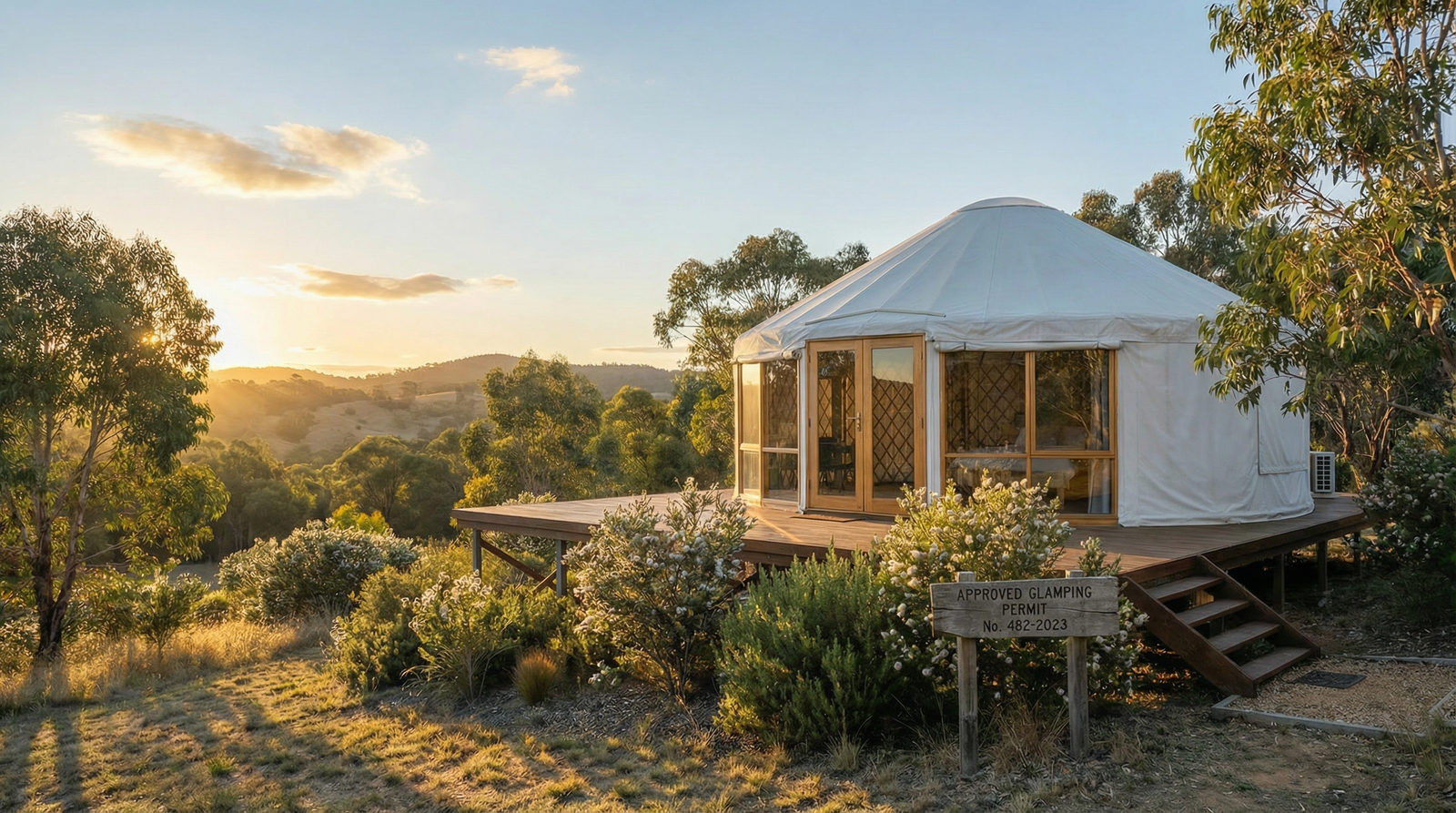
 By Ryan Smith