hello@yurtinthedirt.com.au
 +61 489 269 088


Start with the land, not the tent. Work out who your guests are, check what your local council needs before you spend a cent, then start small with two to four good units and grow from what your bookings tell you. That's the order that works for the operators we supply.
Here's how it plays out in practice.
1. Know what guests are actually paying for
Nobody books glamping for the bed. They book it for the spot: the view over the valley, the quiet, the stars, the feeling of being away without roughing it. So your first job is an honest look at your property.
Ask yourself a few plain questions. Is there a view, or water, or bush, or something guests can't get at home? Is it within a few hours' drive of a city or a tourist route? Can a car get to it in winter? Is there somewhere for each unit that feels private from the next one?
If the answers are mostly yes, you've got the hard part. Tents and domes can be bought. A great spot can't.
2. Check the rules before you buy anything
Every council in Australia handles short-stay accommodation a bit differently, and it often depends on your zoning and how many units you plan. Some treat a couple of tents one way and a dozen another way.
Book in a chat with us to find out what's worked for a lot of our clients around the country. We have letters from independent planners, and engineered decking plans that can help get your ducks in a row before starting anything. Then ring your local council early, tell them what you have in mind, and ask what they need from you. It's the cheapest phone call you'll make in the whole project. We can't tell you what your council will say, but we can help make sure you've got all the right info for them.
While you're at it, talk to your insurer and your accountant. Public liability and how you structure the business are worth sorting before the first guest arrives, not after.
3. Start with two to four units
It's tempting to plan twenty. Don't, at least not yet.
Two to four units lets you learn how your site works: where guests park, how long cleaning really takes, what the water and power use looks like, and which unit gets booked first and why. You'll make small mistakes, and they're a lot cheaper across three units than across fifteen.
Yurts at Yelverton Eco Retreat started with four 6m yurts. They now have 9 yurts approved, have since upgraded to our newer ORON yurts, and are exploring Dome options. Starting small is a good size for one operator to run well, and enough to tell whether the demand is really there before you build more.
4. Pick the right structure for your guests
The structure you choose shapes the whole guest experience. The main options are bell tents, safari tents, yurts and geodesic domes, and we've compared them in detail in our glamping tents guide. The short version for a business:
Yurts feel like a proper room. You get straight walls, a high centre and a natural round space that suits a king bed, a lounge corner and a wood heater. Our ORON yurts have a heat-treated, varnished pine frame, hardwood doors and windows and a 900 GSM cover, and come in sizes from 5m up to 12m, so you can fit a couple's retreat or a family stay. ORON starts from $14,350 AUD ex GST.
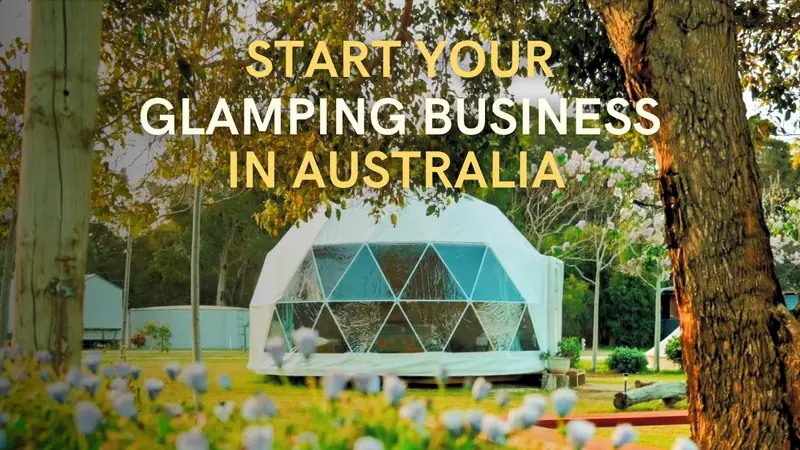
Geo domes are all about the view. About a third of the cover is a clear panoramic section, so guests wake up facing the landscape. They're strong in wind and photograph really well, which helps on booking sites. Our Geo Domes start from $14,490 AUD ex GST.
Plenty of operators mix the two: domes for couples who want the view, yurts for families and longer stays.
5. Budget for more than the structure
The kit is only part of it. When you're planning your numbers, allow for:
- Decks or platforms. Every unit needs a solid, level base the same diameter as the structure. We supply decking plans, and most of our clients build their own.
- Getting there. Paths, parking and sometimes an access track.
- Water, power and waste. Off-grid solar, rainwater tanks and composting toilets are common, and guests often love them. Whatever you choose, it has to be reliable.
- Fit-out. Beds, linen, heating, cooling, lighting and the small things that make reviews glow.
- Bathrooms. In the unit, in a shared amenities block, or a mix.
- Marketing. Photos, a website and booking platform fees.
Get quotes for each line before you commit. Your structure is the easiest number to pin down, so it shouldn't be the only one you have.
6. Build the site in the right order
We see the best results when operators do it in this order: council and approvals sorted, access and services in, decks built, then the structures go up and get fitted out.
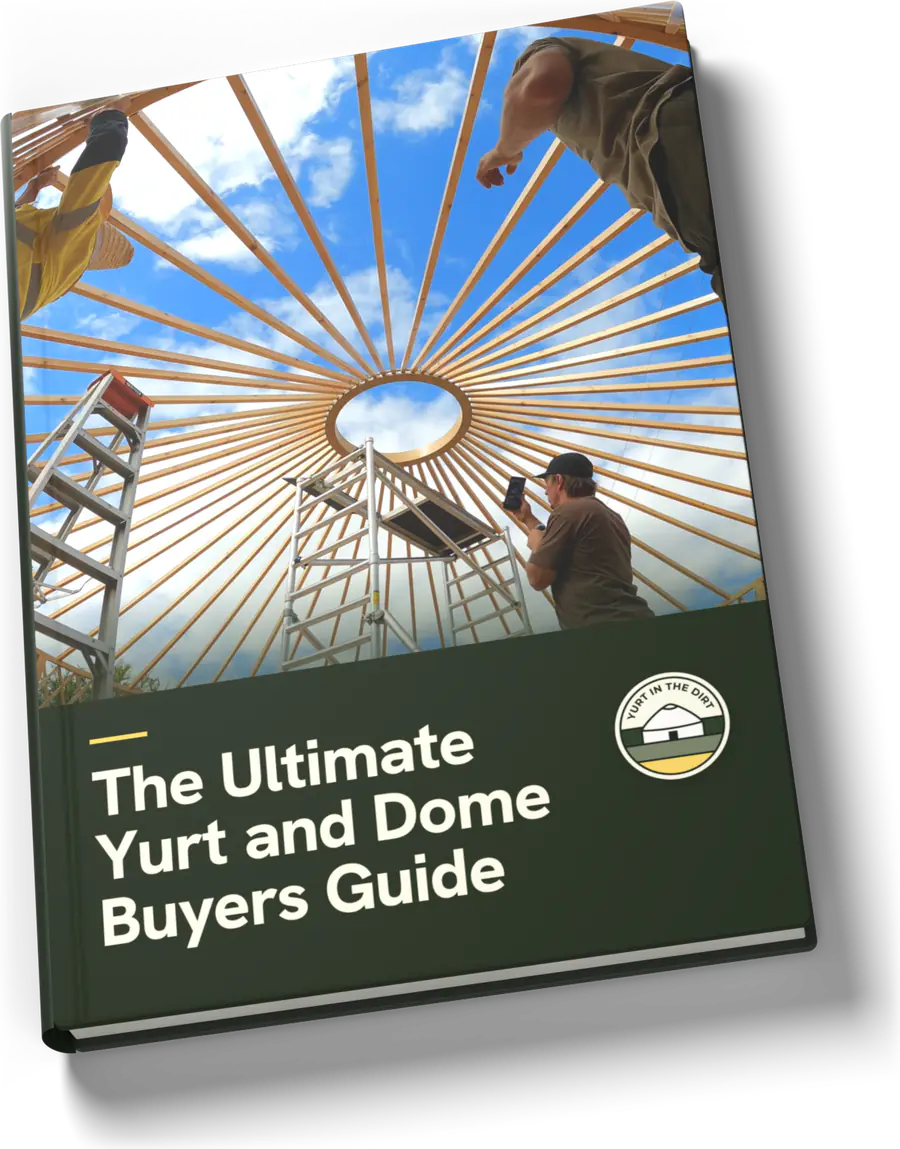
Putting a yurt or dome up is the quick part. With the deck ready, a small crew can have a unit standing in a few days. Our video instructions and project guidance walk you through it, and if you'd rather not do it yourself, we can connect you with builders in our network who'll do the deck and the build for you.
One tip from experience: keep each yurt's platform separate from, or raised above, any surrounding deck. The cover hangs over the edge of the circle, and that's what keeps the weather out.
7. Get your first bookings
Your photos will do most of your selling, so get them right. Shoot at golden hour, with the unit made up and lit from inside, and include one wide shot that shows the setting.
List on the big booking platforms to start with, because that's where people search. Over time, push repeat guests to book direct through your own website so you keep more of each booking. Reviews matter a lot in the early months, so look after your first guests like they're the only ones you'll ever have.
Common questions
How much does it cost to start a glamping business? It depends on how many units you start with and what your site needs in access, water, power and bathrooms. The structures are usually the easiest part to price: our ORON yurts start from $14,350 and Geo Domes from $14,490, AUD ex GST. Get quotes for decks, services and fit-out before you decide.
Do I need council approval for glamping? Rules vary between councils and depend on your zoning and the number of units. Contact your local council early and ask what they need for your plans.
Yurt or dome for glamping? Yurts suit longer stays and families, with more usable floor space. Domes suit couples and short stays where the view is the main draw. Many sites use both.
Can I build the units myself? Yes. Most of our clients build their own decks and put up their own yurts or domes using our decking plans, video instructions and project guidance. If you'd rather hand it over, we can connect you with builders in our network.
Ready to plan your site?
If you're weighing up yurts or domes for a glamping business, have a look at ORON yurts and Geo Domes, or get in touch and tell us about your property. We'll give you a straight answer on what would suit it.