hello@yurtinthedirt.com.au
 +61 489 269 088


 0 Comments
 Share
Share
Glamping Permits in Australia & NZ: What You Actually Need to Know (2026)
So, you’ve got a piece of land, a vision for an off-grid retreat, and you’re ready to start a profitable accommodation business. You’ve probably already looked at our 4 Steps to Launch Your Dream Glamping Business. But then reality hits: Do I need a glamping permit in Australia or New Zealand? What about council approval?
If you’re anything like the dozens of people who call us every month, navigating the red tape of local councils is the most daunting part of setting up a yurt or geo dome. The short answer is: yes, if you are running a commercial accommodation business, you will almost certainly need some form of approval. But the process doesn’t have to be a nightmare.
In this comprehensive 2026 guide, we’re cutting through the bureaucratic jargon. We’ll break down exactly how to get a glamping permit in Australia (state by state) and navigate the resource consent process in New Zealand.
Quick Reality Check: There is no one-size-fits-all “glamping permit” in Australia. What you actually need is Development Approval (DA) or a Planning Permit from your local council, which classifies your yurt or dome based on its intended use.
The Golden Rule: It’s About Use, Not Just the Structure
Before we dive into state specifics, you need to understand how councils think. When you approach a council planner and say, “I want to build a yurt,” they often don’t have a checkbox for that. They don’t care that it’s a beautiful, sustainable, 3,000-year-old nomadic design. They care about what you are going to do with it.
As we discussed in our post about whether you can live in a yurt full-time, councils classify structures based on use. For a glamping business, you are typically looking at one of these classifications:
- Primitive Camping Ground / Tented Accommodation: This is often the easiest pathway. Yurts and domes are treated as high-end tents. They are temporary, not permanently plumbed, and sit on a removable deck.
- Eco-Tourism Facility: If you are setting up multiple domes in a sensitive environmental area, you’ll likely fall under this category, which requires more environmental impact studies.
- Farm Stay / Agritourism: Many states have recently relaxed laws to allow working farms to host guests with minimal red tape.
- Short-Term Rental Accommodation (STRA): If you are putting a single yurt in your backyard to rent on Airbnb, it might fall under STRA rules.
State-by-State Guide to Glamping Permits in Australia
Every state has its own planning legislation, and every local council interprets that legislation slightly differently. Here is the current landscape for 2026.
New South Wales (NSW)
NSW has historically been strict, but recent changes have made it a goldmine for rural landowners. The NSW Government introduced Agritourism planning amendments that make it significantly easier for working farms to host guests.
The Farm Stay Exemption: If you have a working farm (primary production land), you may be able to host up to 20 campers (in tents, yurts, or domes) without needing a formal Development Application (DA), provided you meet specific criteria (e.g., distance from boundaries, no permanent plumbing). Check the NSW Department of Planning website for the latest requirements.
Standard Route: If you aren’t a farm, you will need to submit a DA to your local council for a “primitive camping ground” or “eco-tourist facility.” You’ll need a bushfire assessment (BAL rating) and a wastewater management plan.
Victoria (VIC)
Victoria operates heavily on Planning Permits. If you want to run a glamping business, you will almost certainly need a Planning Permit for “Use and Development of land for a Camping and Caravan Park” or “Group Accommodation.”
The good news? Victorian councils are generally very receptive to eco-tourism. The key here is proving that your yurts or domes won’t negatively impact the landscape. You will need to address the Bushfire Management Overlay (BMO) if you are in a rural area. Because our yurts and domes are non-permanent, they often face fewer hurdles than building a permanent cabin.
Queensland (QLD)
Queensland is arguably one of the most glamping-friendly states in Australia. Many rural councils actively encourage eco-tourism to boost local economies.
In QLD, you’ll typically apply for a Material Change of Use (MCU) for “Nature-based tourism” or “Tourist park.” If your land is zoned Rural, you have a strong chance of approval. The biggest hurdle in QLD is usually wastewater management and ensuring your structures can handle cyclonic wind regions (our domes are incredibly strong, but you must check local wind ratings).
Western Australia (WA)
WA is vast, and the rules vary wildly between a strict metro council and a relaxed regional shire. Generally, you will need Development Approval under the local planning scheme.
Many of our WA clients successfully register under the Caravan Parks and Camping Grounds Act 1995 as a “nature based park.” This classification is specifically designed for low-impact, eco-friendly accommodation like yurts and geo domes. It requires fewer facilities than a standard caravan park, making it perfect for off-grid glamping.
South Australia (SA) & Tasmania (TAS)
South Australia: SA has been pushing to become a premier eco-tourism destination. You will need Development Approval, usually classified under “Tourist Accommodation.” SA councils are particularly focused on wastewater and native vegetation clearance.
Tasmania: Tassie is the spiritual home of off-grid living in Australia. While you still need a planning permit for commercial accommodation, councils are very familiar with alternative structures. The focus will be heavily on environmental impact and visual amenity (making sure your dome blends into the stunning landscape).
Ready to Start Your Glamping Journey?
Don’t let council paperwork stop you from building a profitable business. We supply the highest quality DIY Yurt and Geo Dome kits in Australia and NZ, designed for fast assembly and maximum ROI.
Email Us to Discuss Your Project
Or call us: +61 489 269 088
New Zealand: Navigating Resource Consent for Glamping
For our Kiwi friends, the process is different. In New Zealand, you aren’t looking for a “glamping permit” — you are dealing with the Resource Management Act (RMA) and the Building Act.
To run a glamping business in NZ, you generally need two things:
- Resource Consent: This is permission from your local district council to use your land for visitor accommodation. If your land is zoned Rural, commercial accommodation is usually a “discretionary activity,” meaning you must prove it won’t cause traffic issues, noise, or environmental damage.
- Building Consent: This is where yurts and domes shine. Under NZ law, temporary structures (like tents) often do not require building consent if they are used for a limited time. However, because a glamping yurt is up semi-permanently, councils may require consent. The trick is to ensure the deck is consented, while the yurt itself is classed as a temporary, removable structure.
Pro Tip for NZ: Always book a “pre-application meeting” with your local council. It’s usually free or low-cost, and they will tell you exactly what reports you need before you spend thousands on consultants.
4 Steps to Getting Your Glamping Approval
Whether you are in the Hunter Valley or the Waikato, the strategy for getting your yurt or dome approved remains the same. Here is our battle-tested approach:
Before you buy a yurt, look up your property on your state’s planning portal (or local council website). Find out your exact zoning (e.g., RU1 Primary Production, Rural Living, Environmental Management). Then, look at the “Land Use Table” for that zone. You are looking for terms like Agritourism, Eco-tourist facility, Camping ground, or Tourist accommodation. If it says “Permitted with consent,” you have a green light to apply.
Language matters. If you tell the council you are building a “house” or a “cabin,” they will hit you with the full weight of the Building Code (energy efficiency ratings, permanent foundations, etc.).
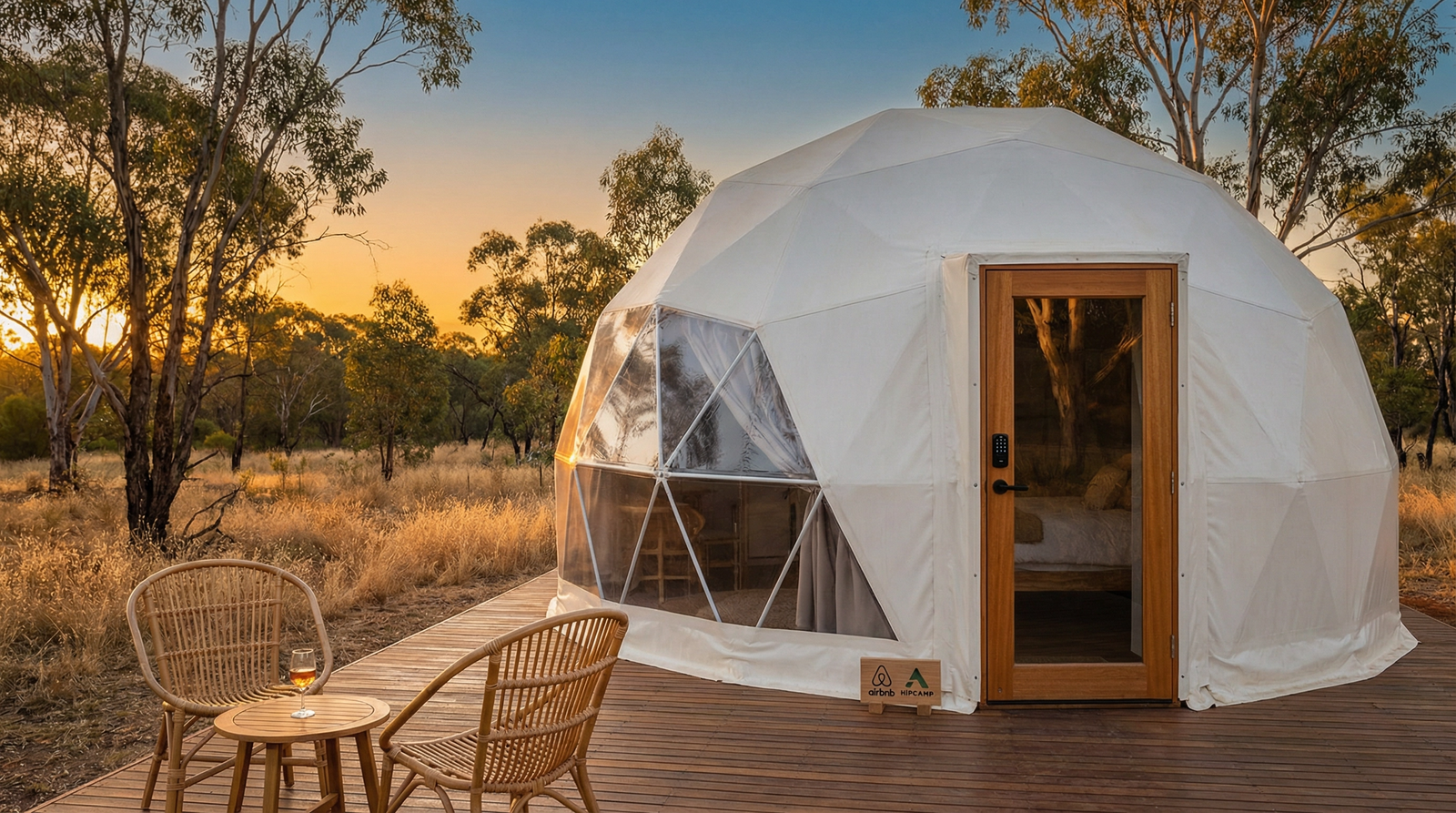
Instead, frame your project accurately: “We are setting up temporary, removable tented accommodation on raised timber decks for low-impact eco-tourism.” Yurts and geo domes are essentially highly engineered, heavy-duty tents. Emphasise that they can be dismantled in two days and leave no scar on the earth.
Councils reject applications when they see unsolved problems. Beat them to the punch by having answers ready:
- Wastewater: How are guests going to the bathroom? Composting toilets are excellent for off-grid setups, but you must ensure they are approved by your state’s health department. If you have a septic system, get a plumber to confirm it can handle the extra load.
- Bushfire Safety: If you are in a bushfire-prone area, you need a plan. How will guests evacuate? Do you have a dedicated water tank for firefighting? (Usually, a 10,000L static water supply with a CFA/RFS fitting is required).
- Traffic and Parking: Show exactly where guests will park so they aren’t blocking rural roads or bogging up your paddocks.
We are honest about challenges and limitations. If your local council is notoriously difficult, or your land has complex environmental overlays, don’t try to DIY the application. Spend $2,000–$4,000 on a local town planner. They speak the council’s language, know the planners by name, and will save you months of headaches and potential rejection.
The Cost of Compliance
When budgeting for your glamping business, you must factor in the cost of getting your glamping permit in Australia or NZ. While our yurts and domes are incredibly affordable (starting around $11,000), the paperwork isn’t free.
Expect to budget between $3,000 and $8,000 for the approval process. This typically includes:
- Council DA / Resource Consent application fees
- Bushfire Attack Level (BAL) assessment
- Wastewater / Septic design report
- Basic site plans and elevations (you can often draw these yourself)
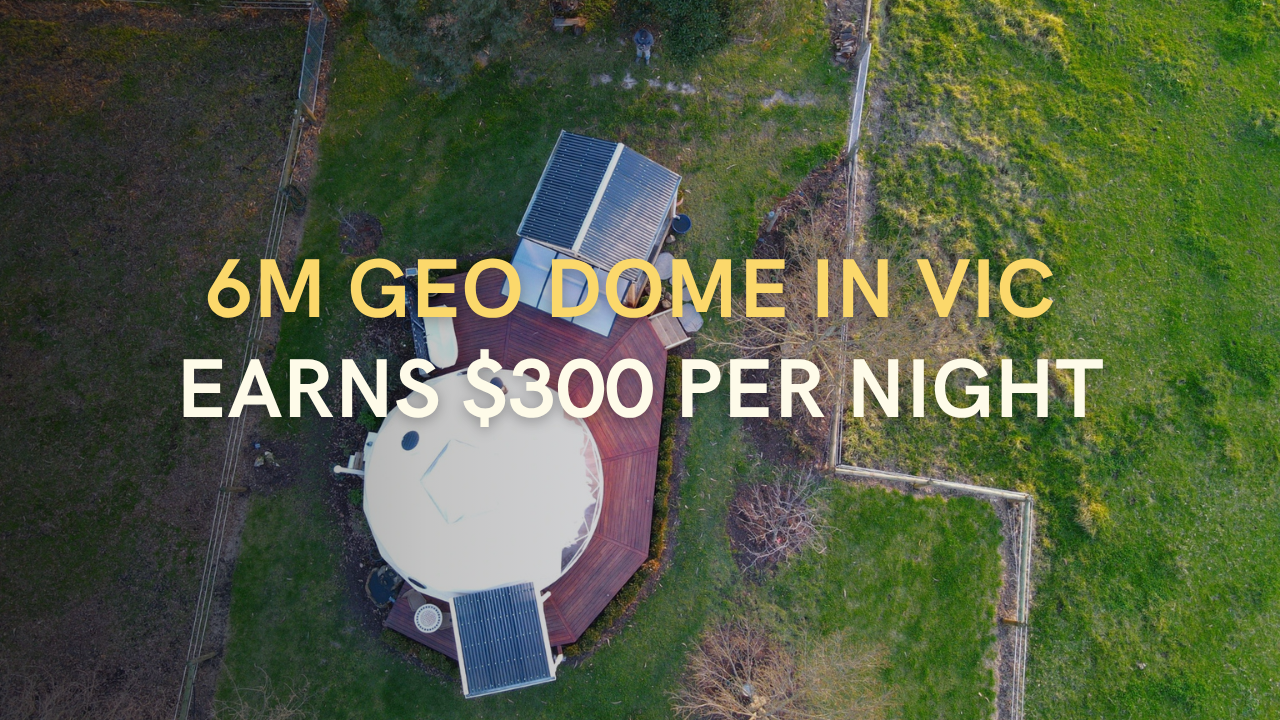
While this sounds like a lot, remember the ROI. As we outlined in our business guide, a single yurt or dome charging $250 a night at 60% occupancy will generate over $50,000 a year. The compliance costs are a one-off business expense that you will recoup in the first few months of operation.
Final Thoughts: Don’t Let the Red Tape Win
Getting a glamping permit in Australia or resource consent in New Zealand requires patience. It might take 3 to 6 months to get your paperwork stamped. But the payoff — running a profitable, sustainable business on your own land, sharing the beauty of the outdoors with guests — is absolutely worth it.
At Yurt in the Dirt, we don’t just sell you a canvas bag of sticks and wish you luck. We’ve helped clients across Australia and NZ navigate this exact process. We provide the structural details, deck plans, and info your council will ask for.
If you’re ready to stop dreaming and start building, get your hands on our Ultimate Buyer’s Guide, or reach out to us directly. Let’s get your extra space sorted.
Get the Ultimate Buyer’s Guide
Get all the Dirt on Yurts & Domes. Our step-by-step guide covers everything from picking the perfect size to building your deck — plus, claim your $500 discount inside!
 Tags:
Tags: 0 Comments
 Share
Share By Ryan Smith