hello@yurtinthedirt.com.au
 +61 489 269 088


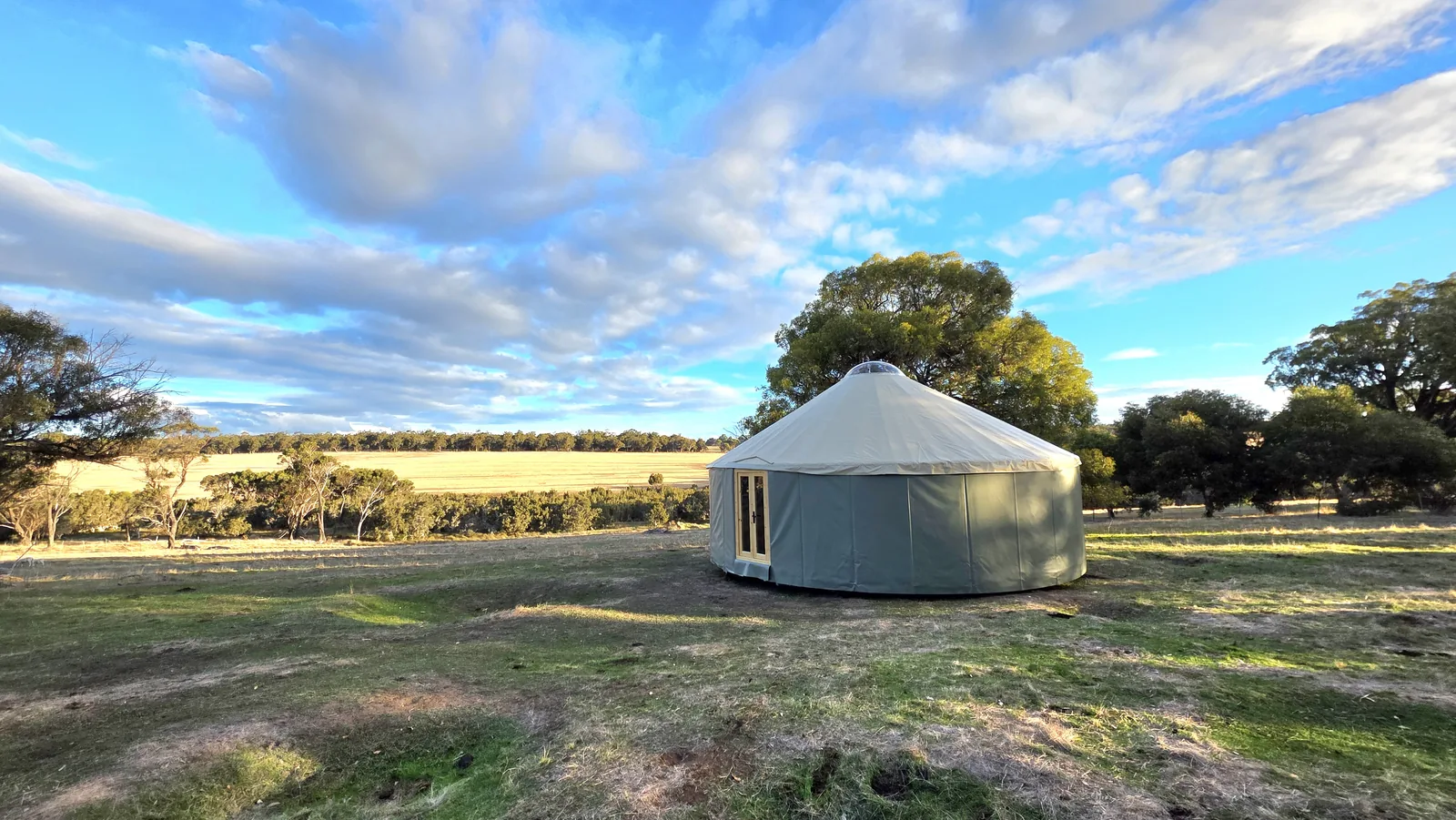
A yurt is a round, timber-framed tent. The walls are a folding lattice, the roof is a ring of rafters that meet a crown in the middle, and an insulated fabric cover wraps the whole thing. Modern yurts sit on a timber deck and get used as studios, guest rooms, glamping stays and off-grid homes.
Key facts
- Shape: round, with no internal posts, so the whole floor is usable.
- Frame: a lattice wall, rafters and a central crown that lets light in. Many yurts use a light bamboo or softwood lattice; our ORON frame is solid, heat-treated timber.
- Cover: our ORON outer covers are 900 GSM with a matte finish, with insulation and an inner liner underneath.
- Sizes: our ORON kits run from 20 sqm (5m) up to 80 sqm (10m), with 12m by enquiry.
- Price: from $14,350 AUD ex GST for a 5m ORON kit, as at October 2026.
- Base: a timber deck the same diameter as the yurt.
- Warranty: 3 years on the frame and cover against defects in materials and workmanship.
What is a yurt, in plain English?
It's a round tent with a proper timber skeleton. That skeleton is what separates a yurt from a camping tent or a bell tent, and it's why a good one feels like a room rather than somewhere you pitch for the weekend.
The idea comes from the nomadic families of Central Asia, who have lived in felt-covered yurts for thousands of years. English borrowed the word through Russian. The basic design hasn't changed much, because it works: the lattice and rafters push against each other, a tension band holds the walls in, and the load spreads evenly all the way round.
That's why we're fussy about the frame, the cover and the insulation in every kit we sell.
How is a modern yurt built?
A modern yurt is built from five main parts: the deck, the lattice wall, the rafters, the crown and the cover. You build them in that order, and once the deck is done the frame goes up surprisingly fast.
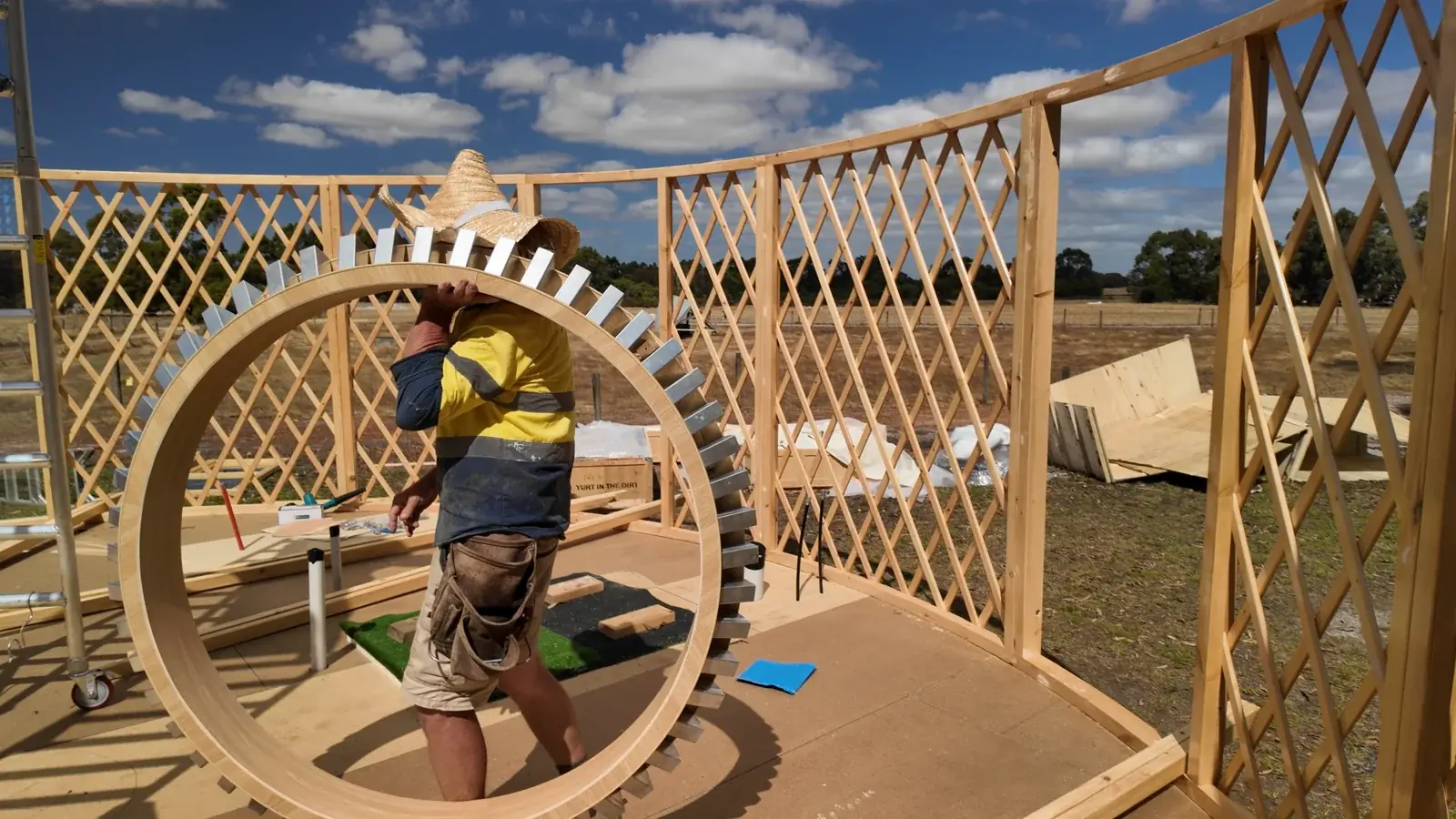
- The deck. A round or many-sided timber platform, the same diameter as the yurt. Never bigger, because the outer cover hangs over the edge to shed water. If it joins a bigger deck, keep the yurt circle raised or leave a 10 to 20mm gap.
- The lattice wall. Timber slats that fold out like a concertina to form the circle, with the door frame set into it.
- The rafters. Long timber poles that run from the top of the wall up to the crown.
- The crown. The ring at the top that holds the rafters and lets daylight in through a clear dome.
- The cover. The outer waterproof cover, with insulation and a liner inside it.
If you want the detail on materials, our guide to what a yurt is made of goes through each layer, and the yurt platform guide covers the deck itself.
Is a yurt a tent or a house?
A yurt sits somewhere in between. It's a tent in the sense that the walls and roof are fabric, so it's lighter, quicker to build and cheaper than a timber house. But it has a solid frame, real doors and windows, insulation and a timber floor, so it lives far more like a small house than a tent.
That's why people search for both "yurt tent" and "yurt house". The honest answer is it depends on how you fit it out. A bare yurt with a bed is a very comfortable tent. Add a kitchen, a wood heater and a separate bathroom close by, and you've got something that feels like a home.
Zoe and James have lived in their yurt for more than two years now. It's a good example of how far a simple kit goes when the deck, heating and fit-out are done well.
What are the different types of yurt?
We sell three ranges, and they suit different budgets and uses. Here's how they compare, with kit prices as at October 2026.
| Typical standard yurt | ORON yurts | Geodesic Domes | |
|---|---|---|---|
| Sizes | Varies by maker | 5m to 10m (20 to 80 sqm) | standard sizes from 5m to 10m, with larger custom sizes available on request |
| Kit price from (AUD ex GST) | Varies by maker | $14,350 | $14,490 |
| Frame | Light lattice, often bamboo or softwood, softwood rafters | Heavier timber frame, hardwood doors and windows | Geodesic frame of triangles, with a clear panoramic section |
| Best for | Short-term or light use | Long stays, homes, premium glamping | Glamping, views, wow factor |
- ORON yurts are our premium range, with a heavier frame, wool felt insulation, a hemp-cotton liner and colour choices of Bushland, Sand Dune, Red Ochre, Riverstone and Deepwater.
- Geodesic Domes aren't yurts strictly speaking, but people often weigh them up side by side. They suit glamping sites where the view is the main event.
You can browse all our yurts for sale with full sizes and prices.
What do people use yurts for?
Most of our clients use a yurt as extra space they can't easily get any other way. The common ones are a home office or studio, a guest room, a yoga or art space, a glamping stay that earns income, and an off-grid home on a rural block.
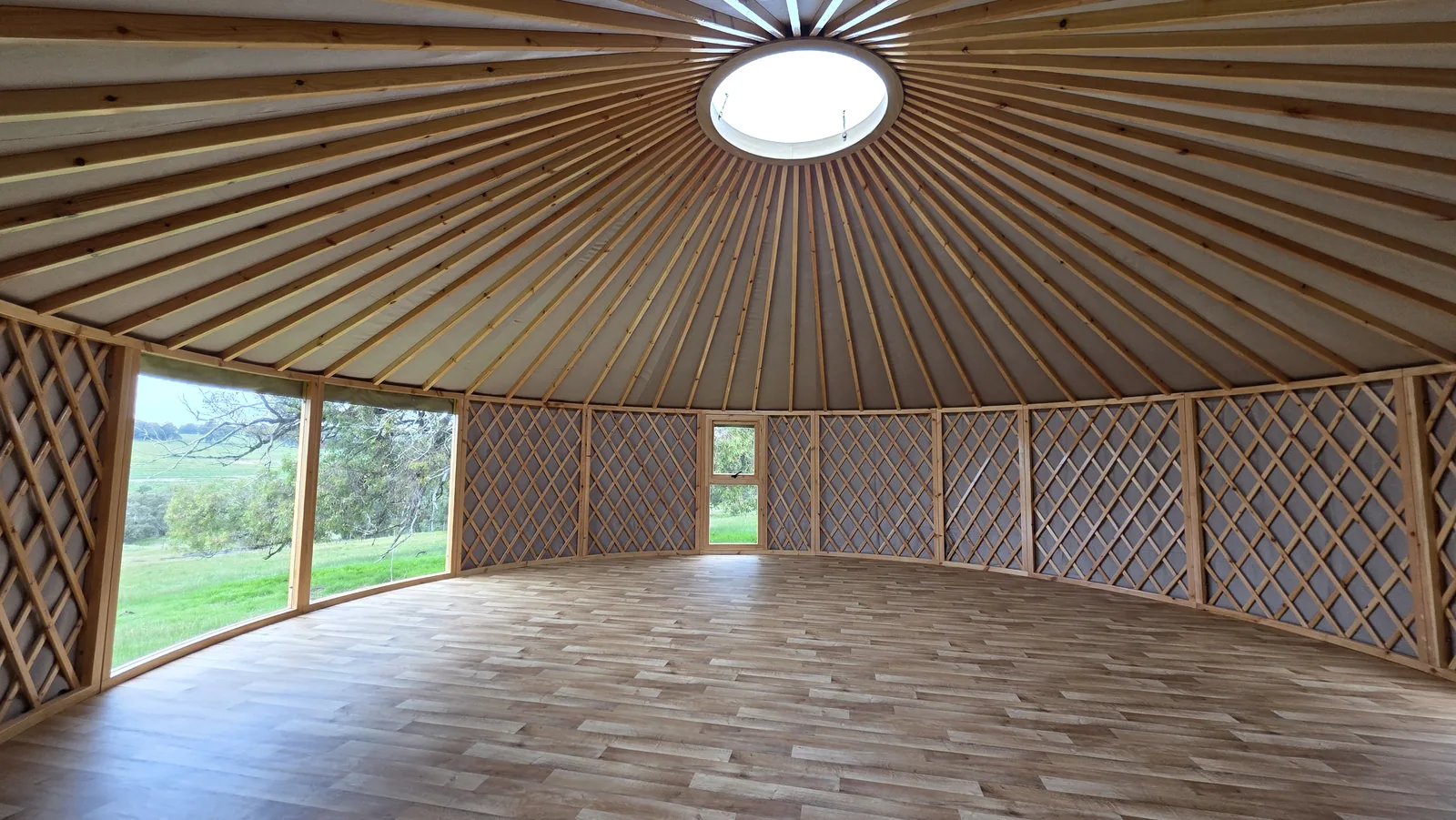
The Munoz family built an 8m ORON in the Northern Rivers, NSW, and it shows how much room you get. Eight metres across gives you about 50 sqm with no posts in the way, so a lounge, a dining table and a bed corner all fit without feeling squeezed.
Whatever you're planning, check your local rules for how you can use the yurt on your land before you order. Every block is different.
How long does a yurt last?
A well-kept yurt lasts a long time. On our kits, the frame, doors and windows are expected to last 15+ years, and the outer cover around 7 years before you'd think about replacing it. The cover is the part that wears, and it's designed to be swapped without touching the frame.
Looking after it is mostly common sense. Keep the cover clean, clear leaves out of the crown, check the tension band each season and keep the deck solid. A little care in autumn saves a lot of hassle in winter.
What does a yurt cost in Australia?
Our ORON yurt kits run from $14,350 AUD ex GST for a 5m to $32,090 for a 10m, as at October 2026. The kit is the yurt itself. It doesn't include the deck, flooring, fit-out, plumbing, electrical or installation, so budget for those too.
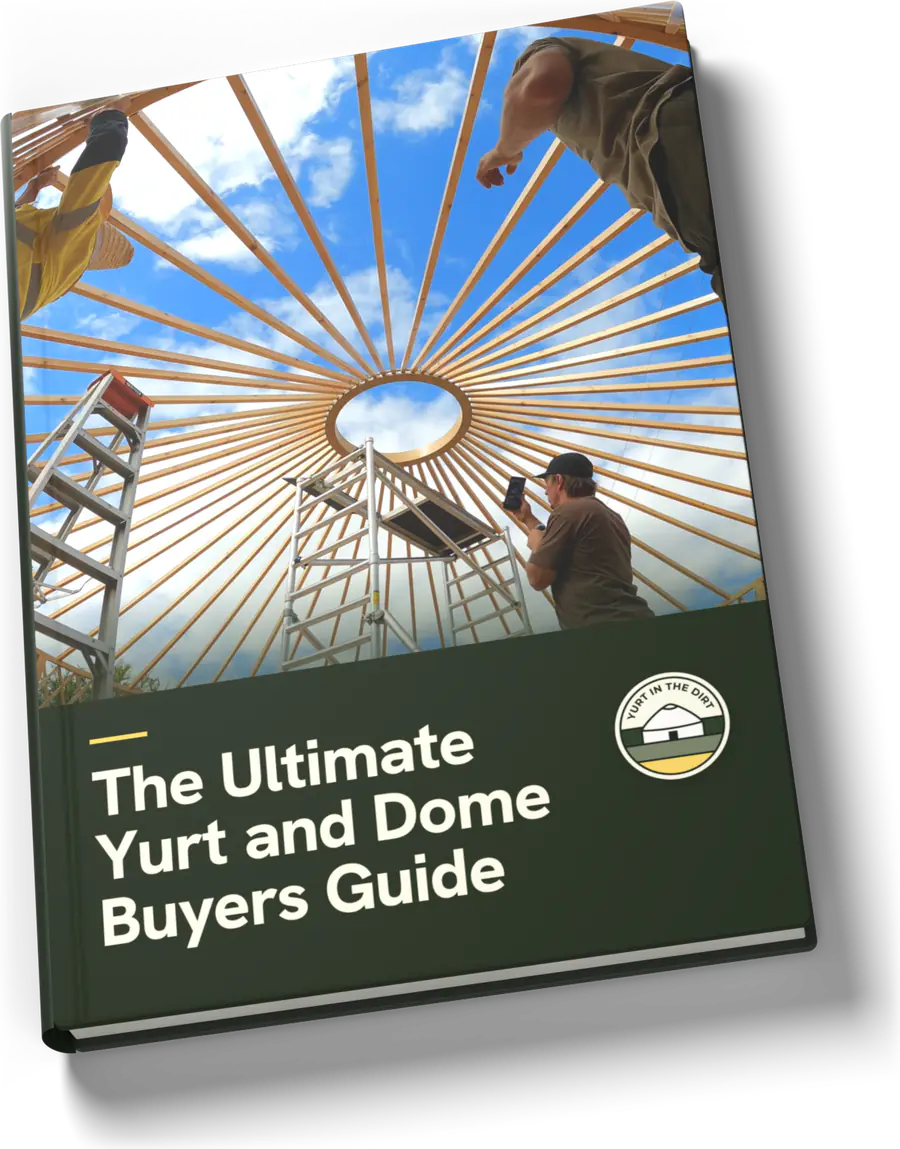
Our full breakdown is in how much does a yurt cost. And if you grab our free buyer's guide, you'll get $500 off any yurt or Geo Dome. Get the buyer's guide
Frequently asked questions
What is the difference between a yurt and a tent?
A yurt has a rigid timber frame of lattice walls, rafters and a crown, plus insulation, real doors and windows. A tent relies on poles and fabric alone. That frame is why a yurt can be lived in comfortably through the seasons.
Do yurts have bathrooms?
Not as part of the kit. The kit is the shell, and plumbing isn't included. Many of our clients build a small bathroom close by, and others have a plumber fit one inside.
Are yurts warm in winter?
Yes, with the right setup. Our covers are insulated and ORON yurts add wool felt, so a small wood heater or reverse-cycle unit keeps a yurt cosy.
How big is an 8m yurt?
An 8m yurt gives you about 50 sqm of open floor with no internal posts. That's enough for a lounge, kitchen, dining and a bed area.
What size deck does a yurt need?
The deck should be the same diameter as the yurt, never bigger. The outer cover hangs over the edge to keep water out, so a bigger deck would let rain run in under it.
How long does a yurt take to build?
Once the deck is ready, a small team can usually put the frame and cover up in a couple of days. The deck takes longer than the yurt.
5-star Google reviews, 150+ client builds across Australia and New Zealand.
Written by Ryan Smith, founder of Yurt in the Dirt. Prices are AUD excluding GST, as at October 2026.