hello@yurtinthedirt.com.au
 +61 489 269 088


 0 Comments
 Share
Share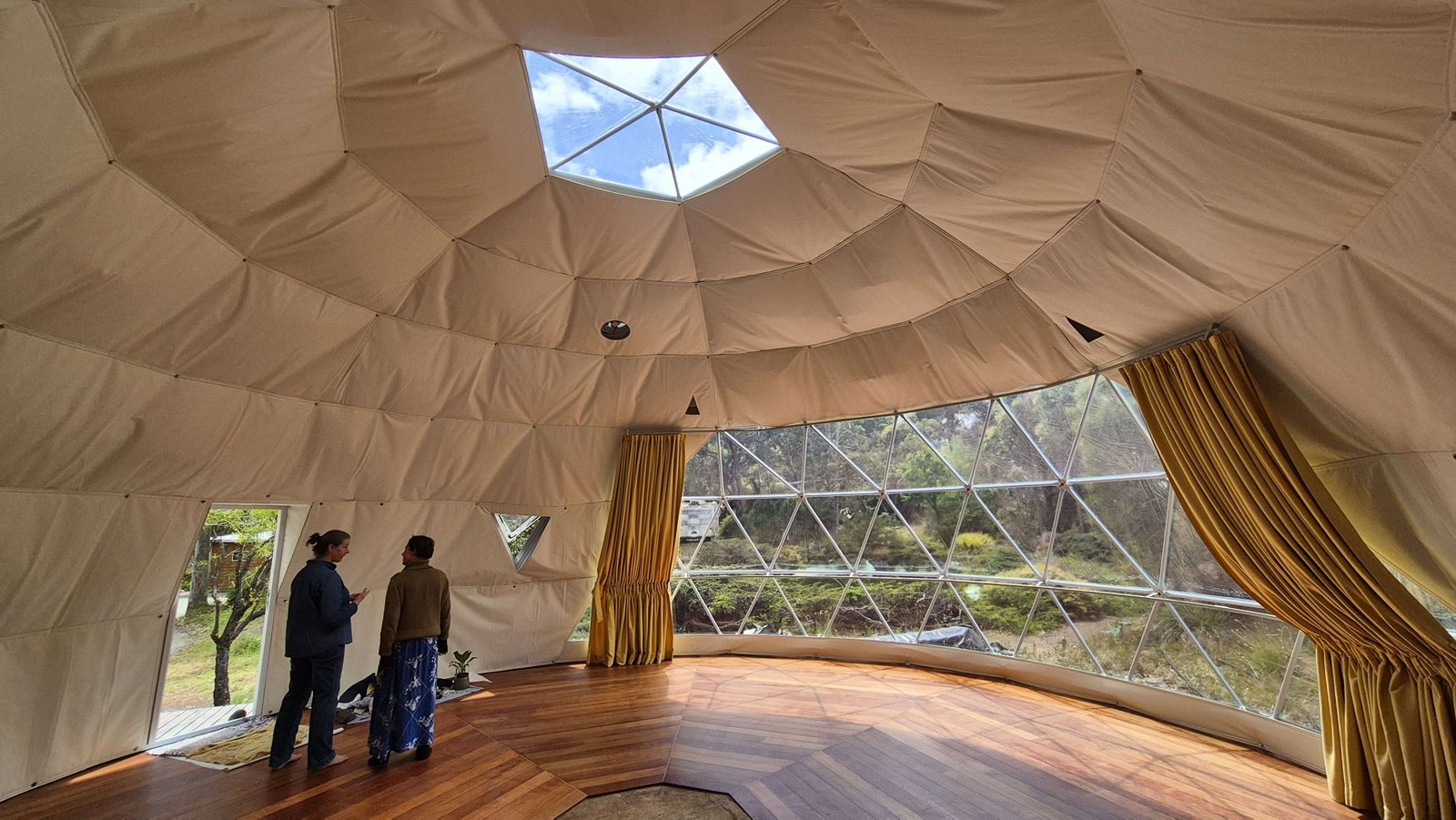
Geodesic Domes Australia: Complete Buyer’s Guide (2026)
Geodesic domes in Australia have moved well beyond architectural curiosity. Whether you’re planning a glamping business in NSW, setting up an off-grid retreat in WA, or looking for a backyard studio in Victoria, a geo dome offers a fast, durable, and genuinely striking solution.
But with a lot of conflicting information online, it pays to understand exactly what you’re buying before you commit. This guide covers everything — from how domes work and what they cost, to how they compare with yurts and what councils across Australia and New Zealand actually say about them.
Quick Summary: A 6m geodesic dome is the industry standard for commercial glamping in Australia and NZ. A complete, guest-ready setup typically costs $36,000–$56,000 all-in and can earn $300+ per night. Council approval is usually required for commercial use, but the process is manageable with the right preparation.
1. What is a Geodesic Dome?
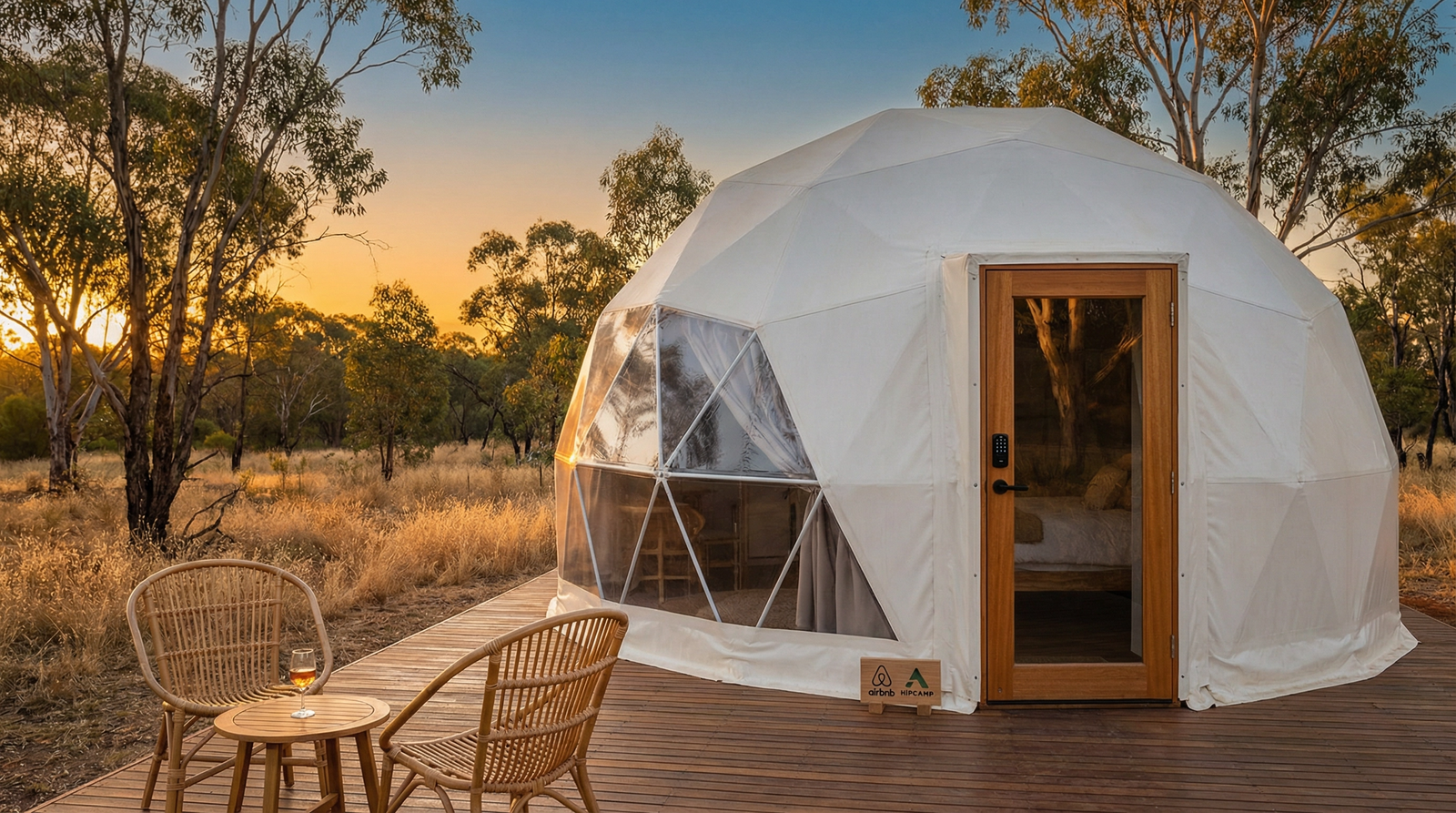
A geodesic dome is a hemispherical structure built from a network of interconnected triangles. Popularised in the mid-20th century by architect Buckminster Fuller, the design distributes structural stress evenly across the entire frame — meaning no internal support columns are needed and the interior is completely open and unobstructed.
For the modern Australian and New Zealand market, geodesic domes are typically sold as flat-pack DIY kits. They feature a powder-coated steel or aluminium frame covered by a heavy-duty, UV-resistant PVC membrane. A large panoramic window section — usually covering roughly one-third of the dome — provides sweeping views and floods the interior with natural light.
Why the shape matters: Because of their aerodynamic profile, geodesic domes are exceptionally wind-resistant. Wind flows around the structure rather than pushing against flat walls. This makes them particularly well-suited to exposed coastal sites in WA and SA, or high-country blocks in NZ where traditional structures would struggle.
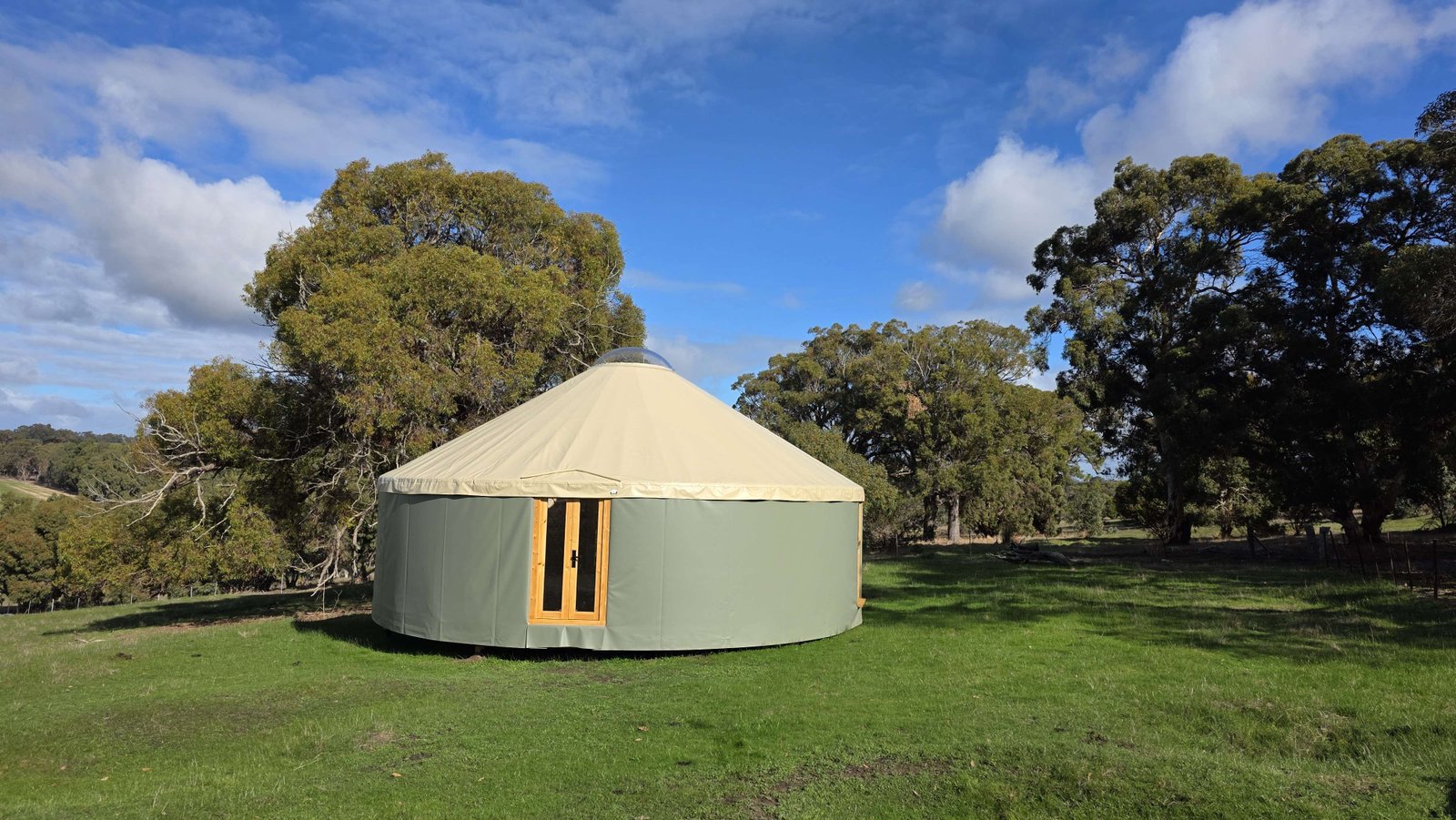
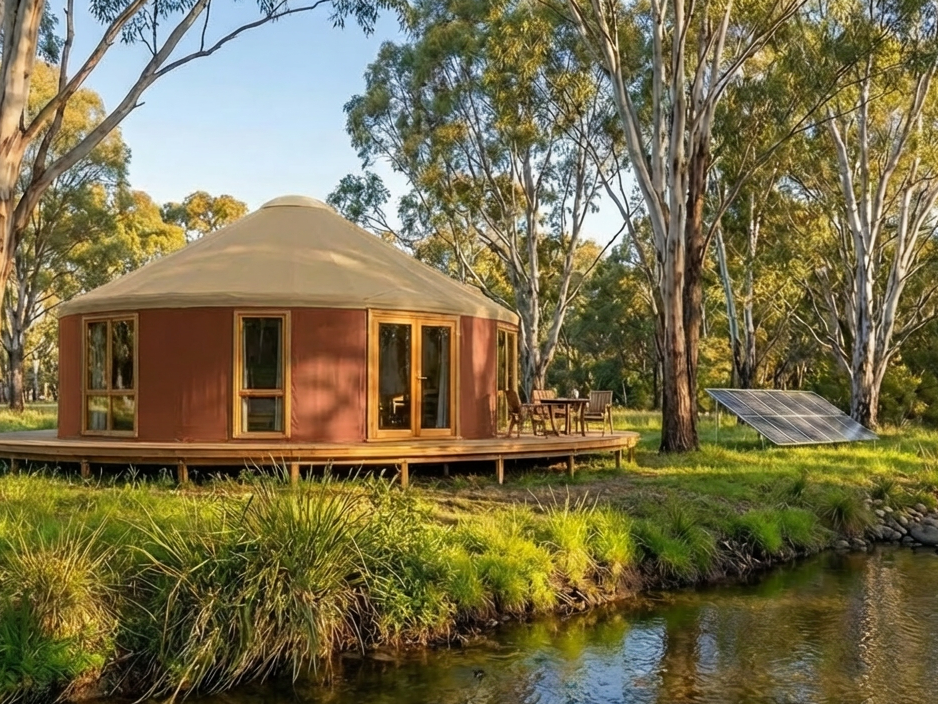
Unlike a traditional yurt, which uses a cylindrical lattice wall and a conical roof, a dome is a single continuous curved surface. This geometry is what gives it both its distinctive look and its structural advantage — and it’s why domes photograph so well on booking platforms.
2. Geodesic Dome vs Yurt — Which is Right for You?
We speak to many clients who are torn between a geodesic dome and a yurt. Both are excellent structures, and we sell both — so this is an honest comparison rather than a pitch for one over the other.
| Feature | Geodesic Dome | Yurt |
|---|---|---|
| Aesthetic | Modern, geometric, futuristic — photographs brilliantly | Traditional, rustic, warm — strong cultural character |
| Interior Feel | Sloping walls, dramatic high ceiling at centre | Vertical lower walls, conical roof with central skylight |
| Usable Wall Space | Lower — sloping walls limit furniture placement | Higher — vertical walls are easier to furnish against |
| Wind Resistance | Exceptional — aerodynamic shape deflects wind | Very good — round shape handles wind well |
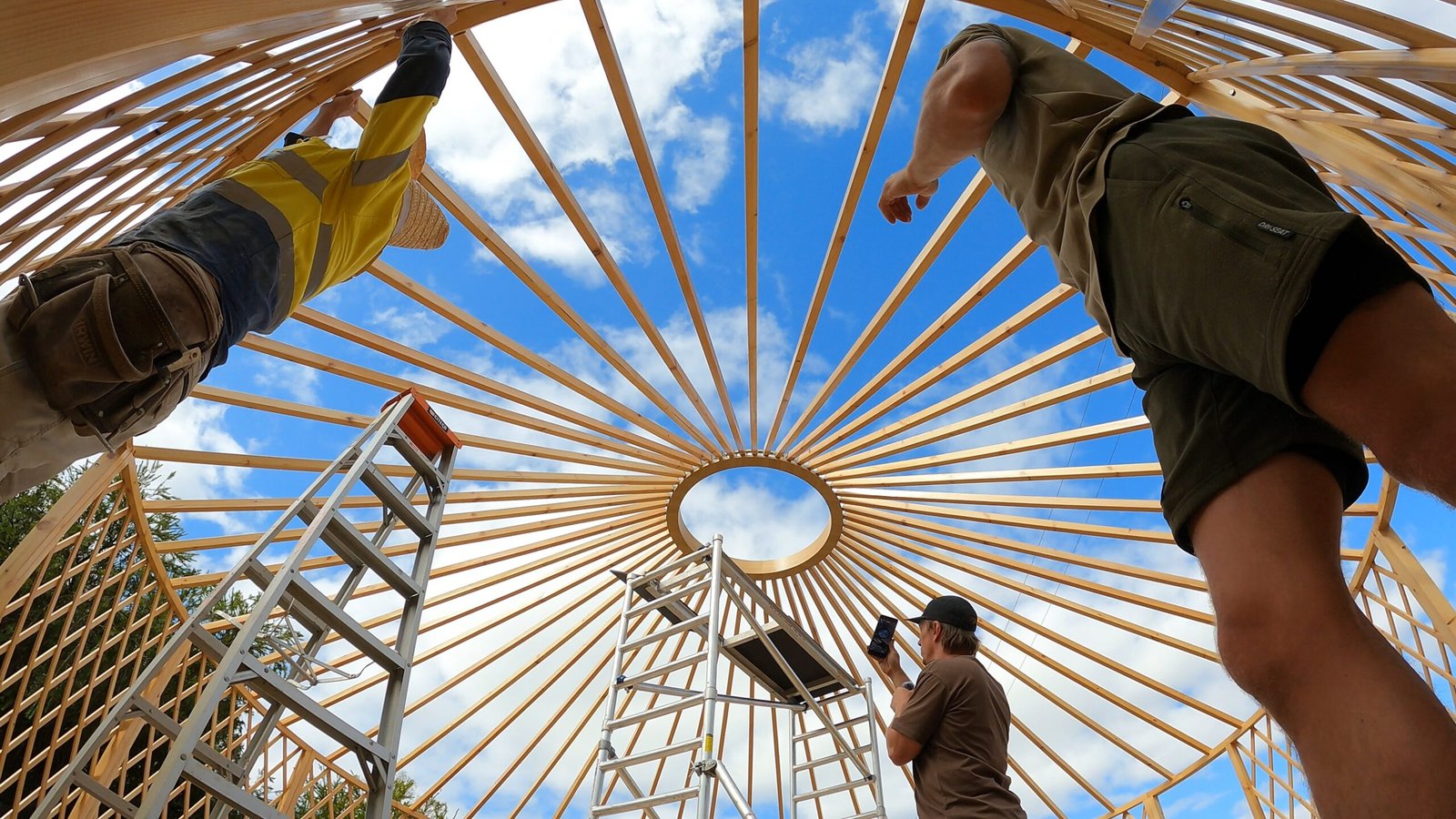
| Assembly Time | 2–3 days for a first-time DIY build | 1–2 days for a first-time DIY build |
| Panoramic Views | Excellent — large window panel faces outward | Good — windows can be added but are smaller |
| Airbnb Appeal | Very high — unique listing type, strong search visibility | High — well-established glamping category |
The choice often comes down to the look you want and the site you have. Domes suit clients who want a bold, contemporary aesthetic that stands out on booking platforms. Yurts suit those who prefer a warmer, more grounded feel — particularly popular for wellness retreats, yoga studios, and off-grid homesteads.
3. What Can You Use a Geo Dome For?
The versatility of a geodesic dome is one of its biggest selling points. Here are the most common ways our clients across NSW, VIC, QLD, WA, SA, and NZ are using their domes.
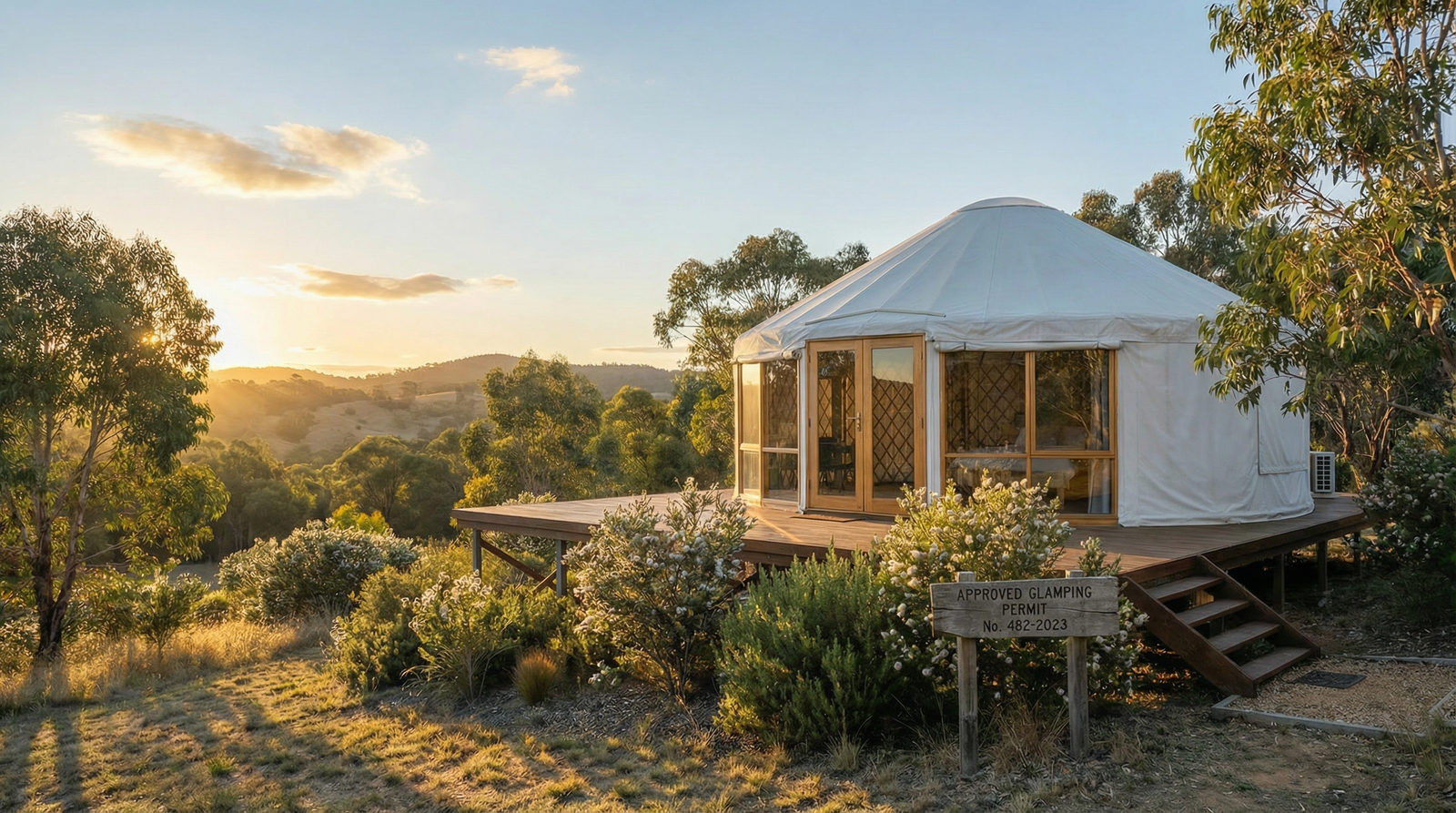
This is the most popular use case by a wide margin. A well-fitted 6m or 7m dome provides enough space for a king bed, a small seating area, and an internal ensuite. Because they look so distinctive, domes command premium nightly rates on Airbnb and Hipcamp. Guests are willing to pay for the experience of sleeping under a panoramic window with uninterrupted views of the bush or the stars.
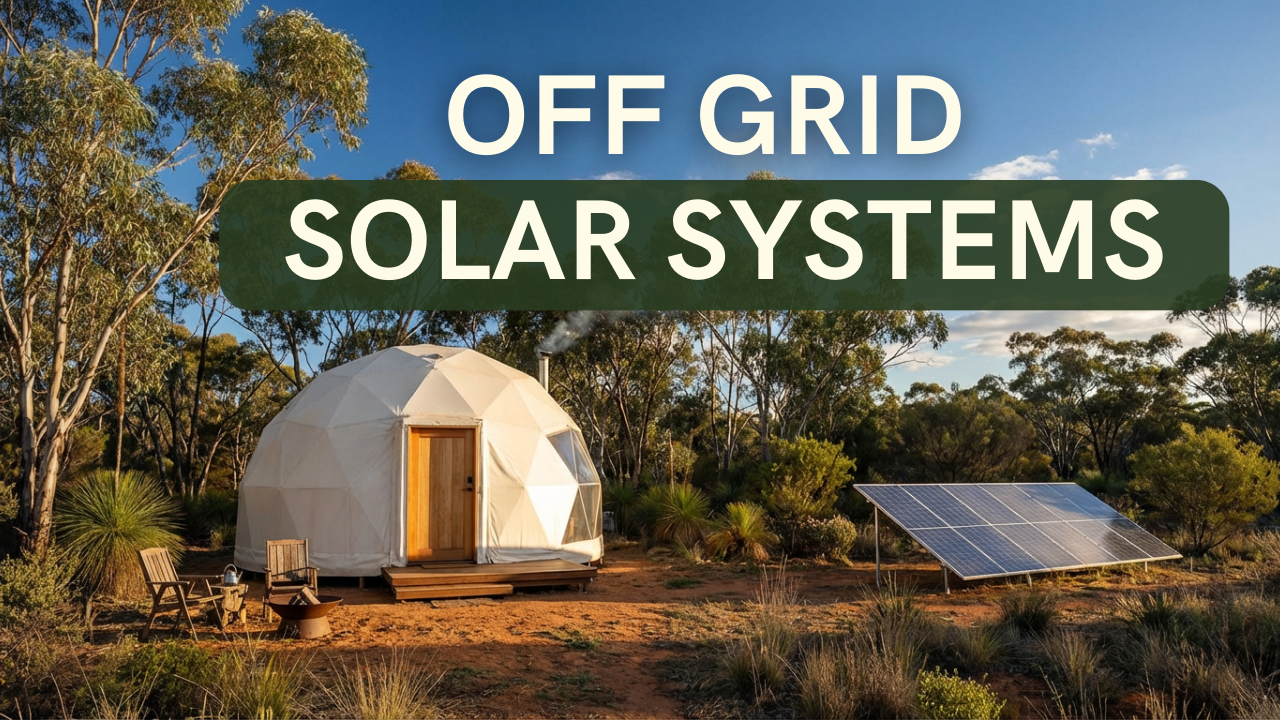
For those with rural land, a dome offers a fast way to establish a comfortable, permanent-feeling base. Paired with a basic solar setup, a composting toilet, and a rainwater tank, a dome becomes a genuinely self-sufficient weekender. The open interior makes heating with a small wood stove highly efficient — there are no cold corners to worry about.
With remote work now the norm for many Australians, a 5m dome in the backyard makes an excellent home office, yoga studio, massage room, or creative workshop. The natural light, high ceiling, and separation from the main house create an environment that is genuinely inspiring to work in — and it avoids the need for a full council-approved extension.
4. Choosing the Right Size Dome
Getting the size right is one of the most important decisions you will make. A dome that is too small will feel cramped once you add furniture and a bathroom. A dome that is too large will cost more to heat and may trigger stricter council regulations.
5 Metre — ~19.6 sqm
Best suited to a backyard studio, home office, yoga or massage room, or meditation pod. Compact and easy to heat, but not large enough for a commercial glamping setup with a bathroom.
6 Metre — ~28.2 sqm
The industry standard for commercial glamping across Australia and NZ. Fits a king bed, a seating area, and a compact ensuite. Strikes the right balance between a comfortable guest experience and manageable setup costs.
7 Metre — ~38.4 sqm
The right call for a premium glamping listing or a comfortable off-grid weekender. Allows a larger bathroom and a small kitchenette. The difference between a $300/night listing and a $450/night listing is often this extra space.
8 Metre — ~50.2 sqm
Suited to spacious accommodation, a small event or retreat space, or semi-permanent living. At this size, you have enough room to genuinely live comfortably year-round.
A note on usable floor area: The sloping walls of a dome mean the full floor area isn’t all usable standing height. In a 6m dome, plan your furniture layout around a central standing zone of roughly 15–18 sqm. It’s worth sketching this out before you order.
5. How Much Does a Geodesic Dome Cost in Australia?
When budgeting for a geodesic dome in Australia or NZ, you need to look well beyond the kit price. A complete, guest-ready setup involves several distinct cost components.
This should include the steel frame, PVC cover with panoramic window, door, and insulation liner. Our kits are built specifically for Australian and NZ conditions — UV-stabilised, wind-rated, and designed to last.
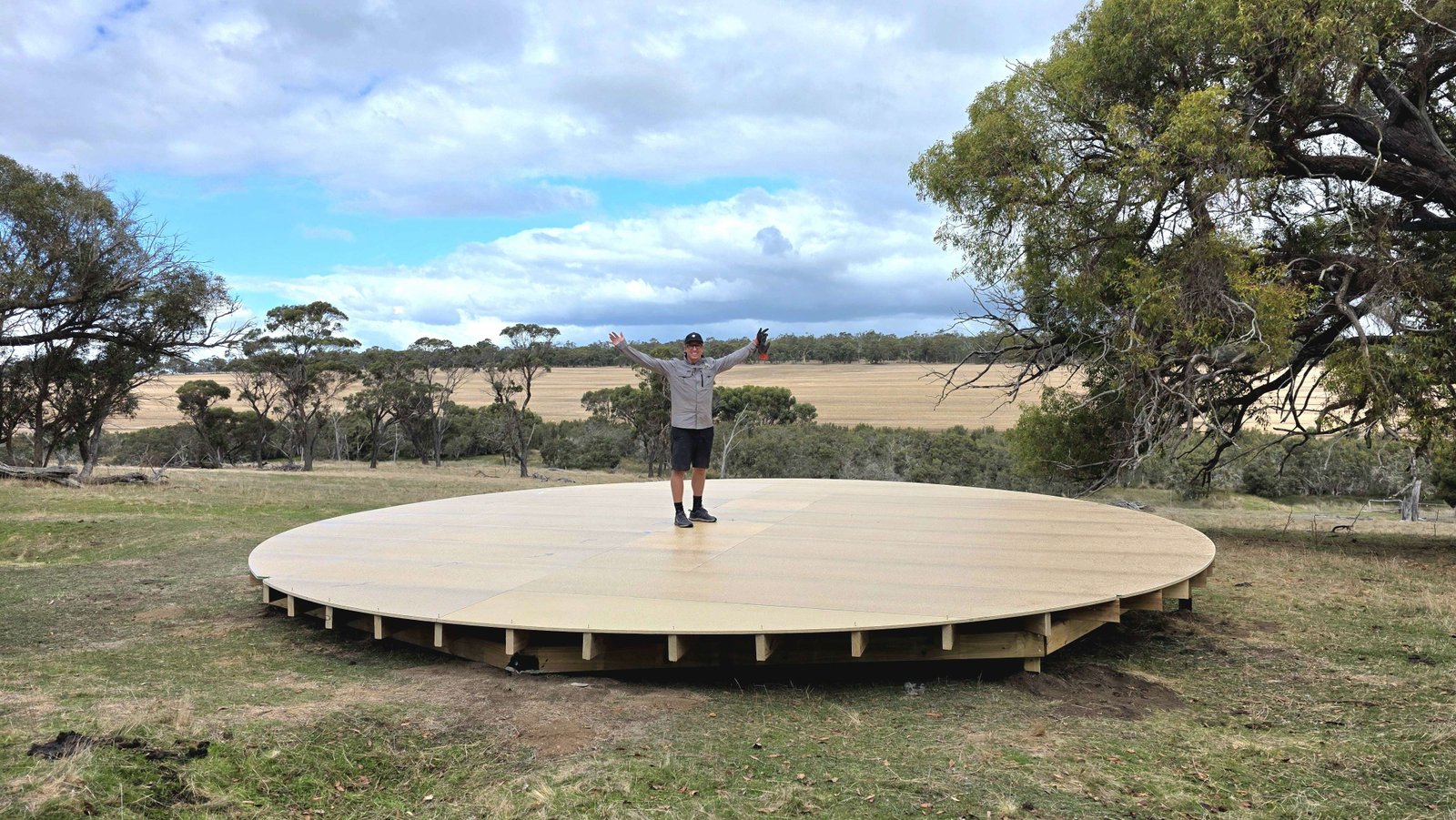
Most clients use a timber deck, which also provides space underneath for utilities and storage. Depending on your site, slope, and whether you build it yourself, a deck for a 6m dome typically falls in this range.
A basic off-grid setup — solar power, battery storage, water tank and pump, composting toilet or septic — starts around this figure. For a full breakdown, read our Off Grid Solar Systems Australia guide.
For a commercial glamping setup, don’t skimp here — the interior is what guests photograph and review. The difference between a $10k and $20k fit-out is usually the difference between a $250/night listing and a $400/night listing.
Total for a complete commercial setup: $36,000–$56,000.
For a real-world example, read about Stu’s Profitable 6m Geo Dome Build in Victoria, which came in at $41,350 all-in and now earns $300+ per night.
Ready to Build the Glamping Setup That Gets Booked?
Explore our range of commercial-grade geo domes — built for Australian and NZ conditions and designed to photograph beautifully.
Or call us: +61 489 269 088
6. Council Approvals in Australia and NZ
The regulatory landscape for alternative structures varies significantly across Australia and New Zealand. The good news is that geodesic domes are generally classified as temporary or moveable structures, which means they often require less rigorous approval than a permanent dwelling.
As we covered in detail in our guide on what councils really allow in 2026, the key is how you frame the use of the structure — not just the structure itself.
New South Wales (NSW)
In NSW, a dome used as a backyard studio may qualify as exempt development if it meets size and height thresholds under the State Environmental Planning Policy. For commercial glamping, you will need a Development Application (DA) through your local council. Councils in rural zones (RU1, RU2) are generally more accommodating than those in residential zones.
Victoria (VIC)
In Victoria, temporary structures on rural land often fall under the moveable dwelling provisions of the Building Act. A planning permit is typically required for commercial accommodation. Councils in the Yarra Valley, Mornington Peninsula, and Gippsland regions have approved numerous glamping setups in recent years and are generally familiar with the process.
Queensland (QLD)
Queensland is one of the most glamping-friendly states. Many rural councils actively encourage eco-tourism. The key trigger for a development application is typically whether the use constitutes a material change of use to tourist accommodation. Rural-zoned land has a strong chance of approval.
Western Australia (WA) and South Australia (SA)
In WA and SA, the rules are set at the local government level and vary considerably. Many WA clients successfully register under the Caravan Parks and Camping Grounds Act 1995 as a “nature based park” — a classification designed specifically for low-impact eco-friendly accommodation. Always speak to your local town planner before purchasing.
New Zealand
In NZ, geodesic domes are typically classified as temporary buildings under the Building Act 2004 if they are not permanently fixed to the ground. This can simplify the consent process significantly. However, if you are connecting to services (water, power, drainage), a building consent will almost certainly be required. Canterbury, Otago, and Waikato councils have all approved dome setups in recent years.
Our advice: Don’t let council approvals put you off. In our experience, the vast majority of clients who approach their council with a well-prepared proposal get approval. The key is to engage early, be transparent about your intentions, and present a professional application.
7. Climate Performance: Will a Dome Be Comfortable Year-Round?
Australia’s climate is extreme — scorching summers in QLD and WA, freezing winters in the Victorian high country and NZ’s South Island. The honest answer is that a dome performs very well in all of these conditions, provided it is set up correctly.
The key is ventilation. A solar-powered extraction fan at the apex draws hot air up and out, while a vent at the base allows cool air to enter. The panoramic window should face south (away from afternoon sun) in Australian setups. A quality reflective insulation liner significantly reduces heat transfer through the PVC cover.
The open, circular interior heats up quickly and efficiently with a small wood-burning stove or a reverse-cycle split system. Because there are no cold corners or dead air pockets, heat distributes evenly. In NZ’s South Island or Victoria’s alpine regions, a well-insulated dome with a wood stove is genuinely comfortable through winter.
Insulation matters: Not all dome kits include adequate insulation for Australian conditions. Make sure your kit includes a quilted or reflective liner rated for the temperature range of your site. Our kits include an insulation liner as standard — ask us about the right specification for your climate zone.
8. FAQs
How long does a geodesic dome last?
A quality steel-framed dome with a UV-stabilised PVC cover should last 15–20+ years with basic maintenance. The frame is essentially permanent; the cover may need replacing after 10–15 years depending on UV exposure and climate.
Can I live in a geodesic dome full-time?
Yes — many people do. The key is ensuring the dome is properly insulated, has adequate ventilation, and that you have council approval for permanent residential use if required. Read our guide on living in alternative structures in Australia for more detail.
Do geodesic domes need a building permit?
It depends on your state, council, and intended use. A dome used as a backyard studio may qualify as exempt development. A dome used for commercial accommodation will almost certainly require approval. Always check with your local council before purchasing.
Are geodesic domes available in New Zealand?
Yes — we supply geo domes across both Australia and New Zealand. Delivery to NZ is available, and our kits are designed to handle NZ’s wind and weather conditions. Contact us for NZ-specific freight pricing.
How does a geo dome compare to a tiny home?
For a detailed comparison, read our Yurts vs Tiny Homes Australia: Complete 2025 Comparison. The short answer: domes are faster to set up, more affordable, and often face fewer council hurdles than a tiny home classified as a permanent dwelling.
Get the Ultimate Buyer’s Guide
Get all the Dirt on Yurts & Domes. Our step-by-step guide covers everything from picking the perfect size to building your deck — plus, claim your $500 discount inside!
 0 Comments
 Share
Share
 By Ryan Smith