hello@yurtinthedirt.com.au
 +61 489 269 088


When a used yurt is a smart buy, what to look at when you inspect one, and the work nobody mentions in the ad. We only sell new yurts, but we've seen people get great deals on used ones.
Second-hand in a nutshell
- Great for a temporary setup, a good price or a sale that includes solar, decking, hot water and lighting.
- See it in person while it's still standing, and start with the outer cover: ask how old it is.
- Expect to dismantle the platform and decking too, and label every piece.
- Budget for replacement parts you won't spot until you're halfway through.
- Fresh covers are often easier than reusing the old ones.
- Count the labour. Paid help can bring the total close to a new yurt.
We only sell new yurts, so you might expect us to tell you to steer clear of used ones. We won't. A second-hand yurt can be a really good option, and we've seen people get great deals. It just pays to go in with your eyes open about the work involved.
When does a second-hand yurt make sense?
When you won't need it for long, the price is right, or it comes with plenty of extras.
Quite honestly, a second-hand yurt can be great if you're not going to need it for a long time. Maybe it's just a temporary thing while you get set up on your land. Obviously, if the price is right, that can be a big factor too.
It also makes more sense when the sale includes the other things you'd otherwise buy separately, like a solar system, decking, a hot water system and lighting. Those extras add up quickly, so a used yurt that comes with them can be worth a closer look.
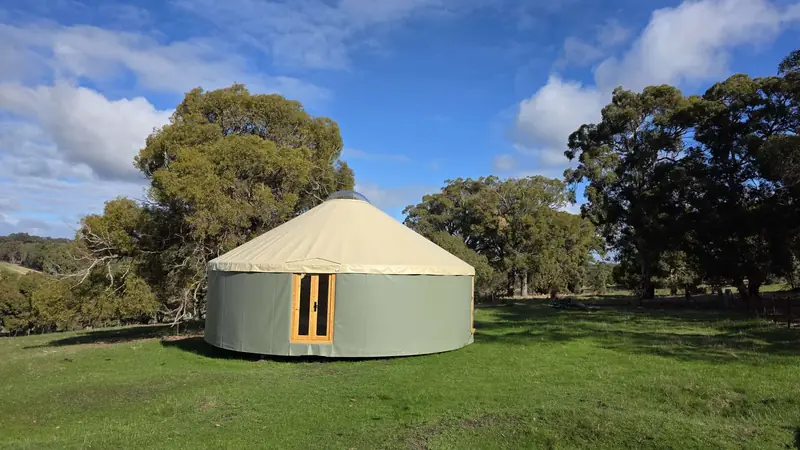
What should you check when you look at one?
Go and see it in person while it's still up, and start with the outer cover. Photos are a good start, but nothing beats standing inside it. Most owners are happy to show you around and answer questions.
Look at every component while it's still standing. Once a yurt is packed into bundles, it's very hard to judge the cover, the layers or the frame, or to see how it all fits together. We'd steer clear of buying one that's already been taken down with only old photos to go on. That's no reflection on the owner; it's just too hard for anyone to know what condition it's really in.
- The outer cover. This is where we'd look first. Ask how old it is and look closely at the roof, which takes the most sun. Fading, a chalky feel, stiffness or fine cracks along the folds mean it's getting near the end of its life. Covers last about 7 years.
- The insulation and middle layers. Ask about them and have a look where you can. Be aware you might not see their true condition until you start taking them off.
- Doors and windows. On a used yurt they're already cut into the cover. If you'd want them somewhere else, that's not really an option.
- The frame. Look for straight rafters, a sound crown ring and solid lattice joints.
- The platform and decking. Ask whether they're part of the sale and what condition they're in, because they'll have to come apart as well.
- What's included. Solar, hot water, lighting, fixings, ropes and any instructions. Write it down together so you're both clear on what's going with the yurt.
If you'd like to know what each part should be made of, see what is a yurt made of.
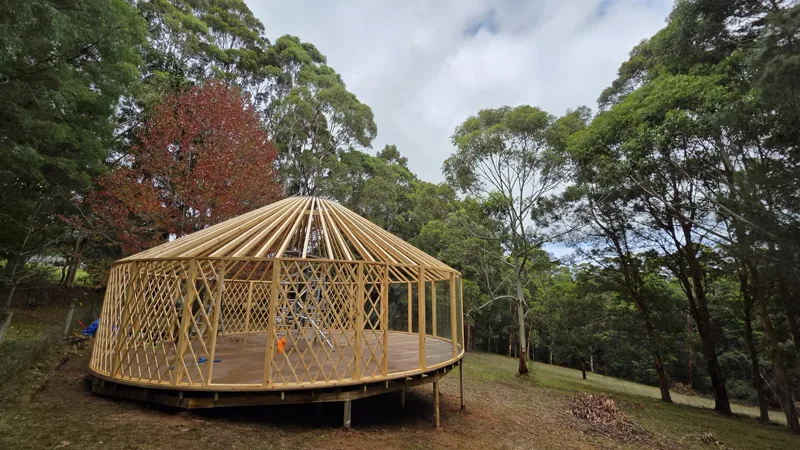
How much work is it to move a used yurt?
A lot. Buying second-hand can be five times the workload of setting up a new yurt. This is the part most people underestimate.
First, everything has to come down, including the platform and the decking. Every piece needs labelling so it can go back in the right place, and often that isn't even possible. Decking boards and platform timbers rarely come up clean enough to reuse as they were.
You'll also be removing silicone and pulling out screws and nails, because that's usually how a yurt and its fit-out are held together once they've been up for a while. Then there are the layers. You might not discover the true condition of the insulation or the middle layers until you start removing them.
Along the way you'll end up buying new bits and pieces to replace the old ones. The trouble is you won't find out what you need until you're too far into it to turn back.
The cover is its own challenge. An outer cover with lots of holes already cut for doors and windows can be very hard to position and get straight again, and pieces of material with cut-outs are awkward to handle. That's why it's generally easier to buy a new set of covers and freshen everything up. Otherwise you can put in a huge effort and still end up putting up inferior materials.
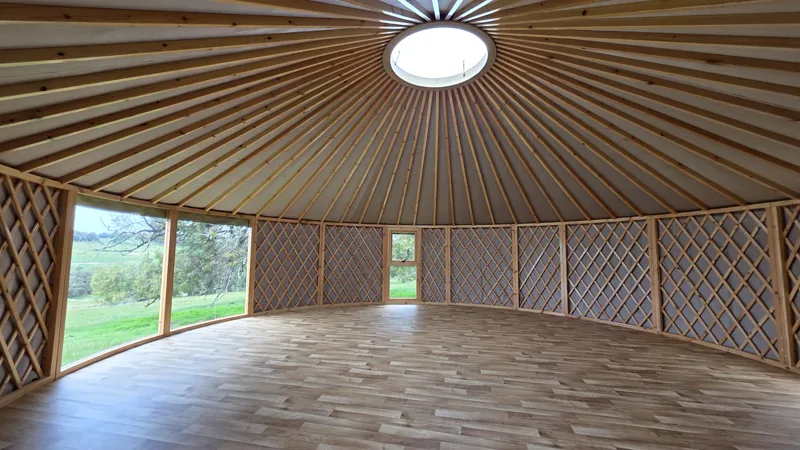
Is it still cheaper once you count the labour?
Sometimes. It comes down to whether price is your only consideration, or whether you value your time.
If you're doing it all yourself and you've got the time, a used yurt can save you real money. If you're paying someone to dismantle it, move it and put it back up, the labour component is huge. Add that to the asking price, plus any new covers and parts, and a second-hand yurt can end up costing you pretty much what a new one costs.
So do the sums honestly before you commit. Some people still come out well ahead, and that's great. For the full picture of what a new setup costs, see how much does a yurt cost, and our yurt platform guide covers the base either way.
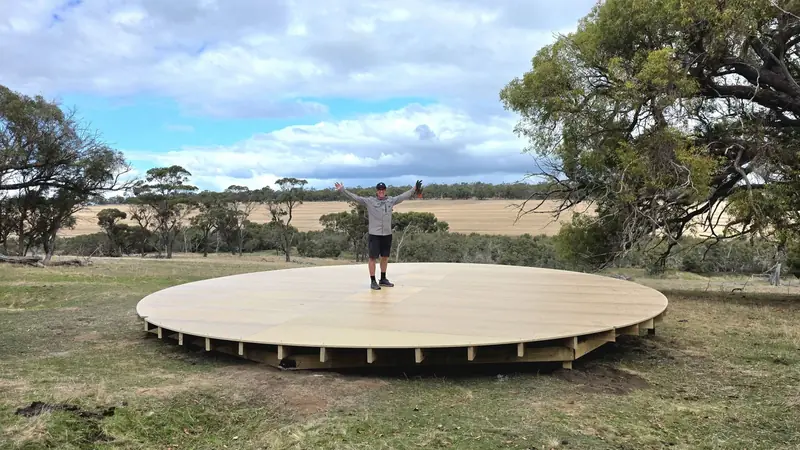
Council rules apply to a used yurt the same way they apply to a new one, so check with your local council before you buy. Our council approval guide is a good place to start.
What do you get with a new yurt?
A yurt that's yours from day one, set up the way you want it.
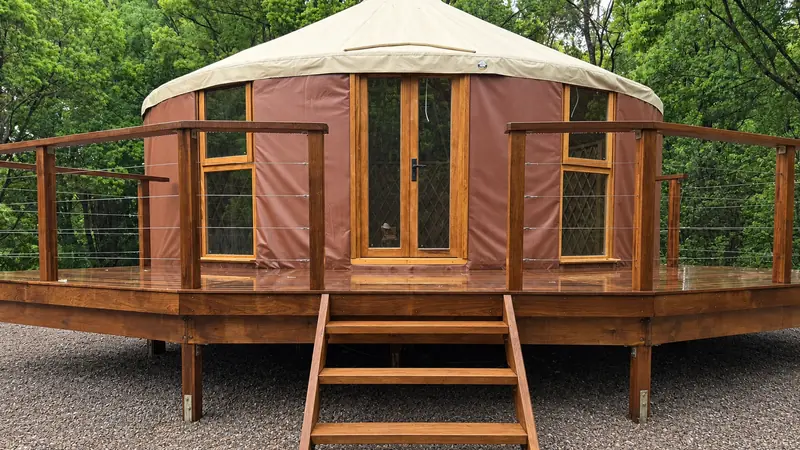
There's nothing like the joy of having your own brand-new yurt arrive in its crates. You're the first one to crack them open. You've chosen your colour combinations and placed your windows and doors exactly where you want them, so the view from the bed or the kitchen is the one you planned.
With an ORON, that means picking from five natural colours with a matte finish, then laying out the doors and windows to suit your site. Everything is new, the covers have their full life ahead of them, and if you need a hand during the build, you can call us. The ORON yurt guide goes through what's in the kit, and if a dome suits you better, have a look at our Geo Domes.
New vs second-hand at a glance
| What to compare | Second-hand yurt | New from Yurt in the Dirt |
|---|---|---|
| Best for | Short-term use, a tight budget, a sale with extras | A long-term home, studio or guest stay |
| Cover life left | Depends on its age, so ask | The full life, about 7 years |
| Doors and windows | Already cut where the last owner wanted them | Placed where you want them |
| Colours | What's there | Your choice |
| Your labour | Dismantle, label, move and rebuild, platform and decking included | One build on a new platform |
| Surprises | Hidden layer condition, replacement parts mid-job | Everything new and accounted for |
| Price | Lower upfront, plus labour and parts | See yurt prices |
Frequently asked questions
Do you sell second-hand yurts?
No, everything we sell is new. We'd still rather you made the right call for your situation, so if a used yurt suits you better, this guide should help you check it properly.
When is a second-hand yurt a good idea?
When you only need it for a while, such as somewhere to live while you get set up on your land, when the price is right, or when it comes with extras like solar, decking, hot water and lighting.
What should I check first on a used yurt?
Go and see it while it's still standing and look closely at every component, starting with the outer cover. Ask how old it is, then look at the insulation and middle layers, the frame, the platform and decking, and what's included in the sale.
Can I buy a yurt that's already been taken down?
We'd avoid it if you can. Once it's packed away, there's no easy way for you or the owner to check the cover, the layers and the frame. Try to see it standing and look over every component in person, rather than relying on old photos.
How much work is it to move a second-hand yurt?
A lot more than most people expect. Dismantling the yurt, platform and decking, labelling every piece, pulling out silicone, screws and nails, then rebuilding can be around five times the work of putting up a new one.
Can I put a new cover on a second-hand yurt?
Often, and it's usually easier than reusing tired covers. The cover has to match the frame's diameter, wall height and roof pitch, so it should come from the yurt's original maker. Our replacement covers for our own yurts and Geo Domes start from around $3,000 depending on size.
Is a second-hand yurt cheaper than a new one?
Upfront, yes. Once you add dismantling, transport, replacement parts and rebuilding, especially if you're paying someone, it can end up costing pretty much what a new one costs.
Weighing up a used yurt?
Tell us what you're planning and where, and we'll show you what a new kit would cost for your build, so you can compare honestly. The free Buyer's Guide unlocks 10% off ORON and $500 off any yurt or Geo Dome.